 English
 中文简体
 русский
 Français
 Español
 عربى
Ask ten engineers what makes an electric motor "high-efficiency" and you will get ten answers, most of them partly right. Some will point to the class printed on the nameplate. Others will talk about copper volume, lamination steel, bearing quality, or the drive controlling the shaft. After building motors since 1997, we have learned that all of these matter, but none of them works alone. A genuinely high-efficiency motor is the result of a design that treats losses as a system and is then matched to a duty cycle that actually uses its strengths.
This guide walks through where the losses come from, how efficiency classes should be read, which motor family suits which job, and what to check before you commit to a specification.
Where the Losses Actually Come From
Every motor turns part of its electrical input into heat instead of shaft torque. Understanding those paths is the fastest way to judge whether an "efficient" design is genuine or simply a label. In practice, losses fall into four families.
- Copper loss. Current flowing through stator windings and rotor conductors meets resistance and dissipates heat. Because the loss rises with the square of current, a motor run at partial load behaves very differently from one run at its design point.
- Iron loss. The magnetic core resists changes in flux, producing hysteresis and eddy-current losses. Thinner, higher-grade laminations reduce both, which is why core steel quality separates an ordinary motor from a good one.
- Mechanical loss. Bearings, seals, and cooling fans consume energy before any torque reaches the load. Friction losses are small individually but constant, so they dominate in small motors running long hours.
- Stray loss. Leakage flux, harmonics, and imperfect air-gap control add a residual burden that is hard to model but easy to feel as extra heat.
Designers attack these losses by adding copper where slot area allows, selecting better magnetic steel, tightening air-gap tolerances, improving ventilation paths, and specifying precision bearings. Each step costs something, and returns flatten quickly, so the real skill lies in knowing which trade-offs a given application will repay.
Reading Efficiency Classes Correctly
International standards give buyers a common vocabulary. IEC 60034-30-1 defines the IE classes, and NEMA Premium covers a comparable tier in North America. The table below summarises how those classes usually map onto real purchasing decisions.
| Class | Common Reference | Typical Application | What It Means in Practice |
|---|---|---|---|
| IE1 | IEC 60034-30-1 | Legacy equipment, intermittent duty | A baseline that is increasingly difficult to justify for continuous operation |
| IE2 | IEC, NEMA Energy Efficient | General-purpose pumps, fans, older lines | A reasonable floor where running hours are modest |
| IE3 | IEC, NEMA Premium | Conveyors, compressors, continuous fans and pumps | The default for new industrial installations in many markets |
| IE4 | IEC 60034-30-1 | High-hour duty, larger frames, variable-speed operation | Strongest payback where annual hours are high and load is steady |
One caution we repeat to every customer: a premium-class motor throttled back to 30 percent load can consume more than a correctly sized standard motor running near its design point. Class tells you how well a motor converts energy at its rating; sizing tells you whether it ever reaches that rating. Where a drive is involved, the motor-drive combination matters more than the nameplate class alone.
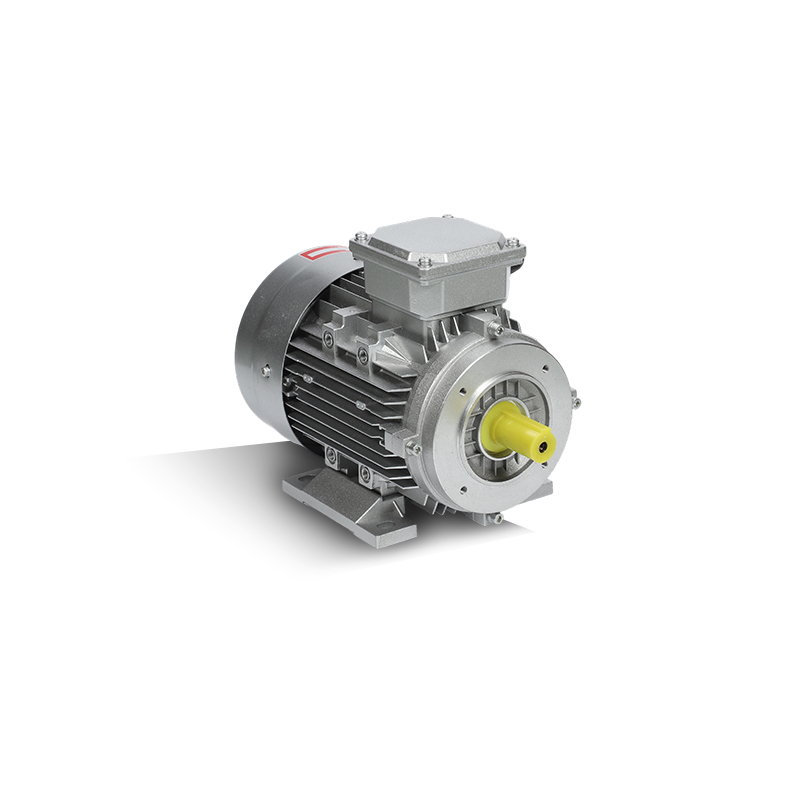
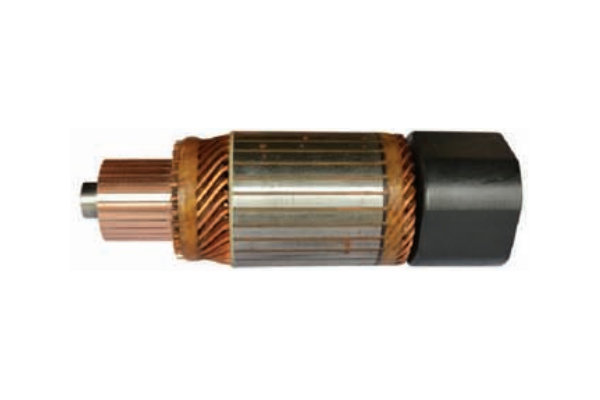 EHBD IE3 Aluminium-Cased Motor: High-Efficiency Asynchronous DesignThis IE3-rated motor offers lightweight aluminum construction and flexible mounting, making it a strong candidate when matching efficiency class to actual load conditions.View Product →
Matching Motor Type to the Duty Cycle
Efficiency is not a property that lives in isolation. Each motor family reaches its best numbers under different conditions, and choosing the wrong family can erase the benefit of a good design.
AC Induction Motors
Rugged, well understood, and available in IE3 aluminium-cased frames, induction motors remain the workhorse for continuous industrial duty. They tolerate harsh environments, need little maintenance, and pair naturally with variable-frequency drives. Their efficiency advantage grows with frame size, which is why larger ratings often deliver the clearest savings.
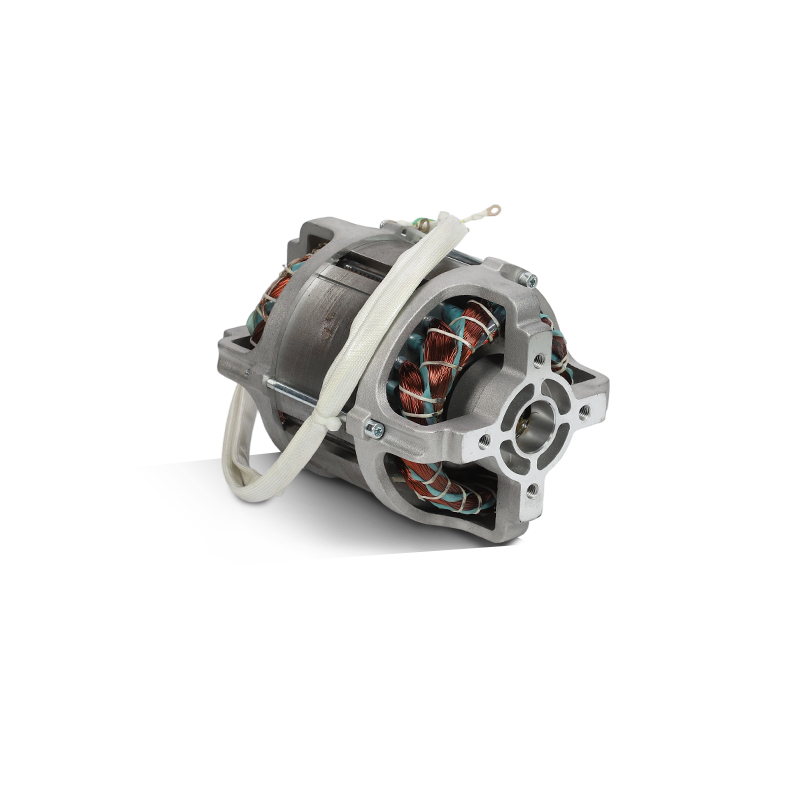 IEC AC Asynchronous Motors Range for Industrial ApplicationsThis category page covers various asynchronous motors for dock levellers, hydraulic systems, and car lifts, helping compare options when selecting for continuous duty and drive compatibility.View Product →
Brushless DC Motors
Removing the brush and commutator eliminates a whole loss path and a maintenance item at once. Electronic commutation lets a BLDC motor hold high efficiency across a wide speed range, which is exactly what battery-powered and variable-speed equipment needs. Our sweeper disc-brush motors are a practical example: the machine runs for hours, the load changes constantly, and every wasted watt shows up as shorter runtime.
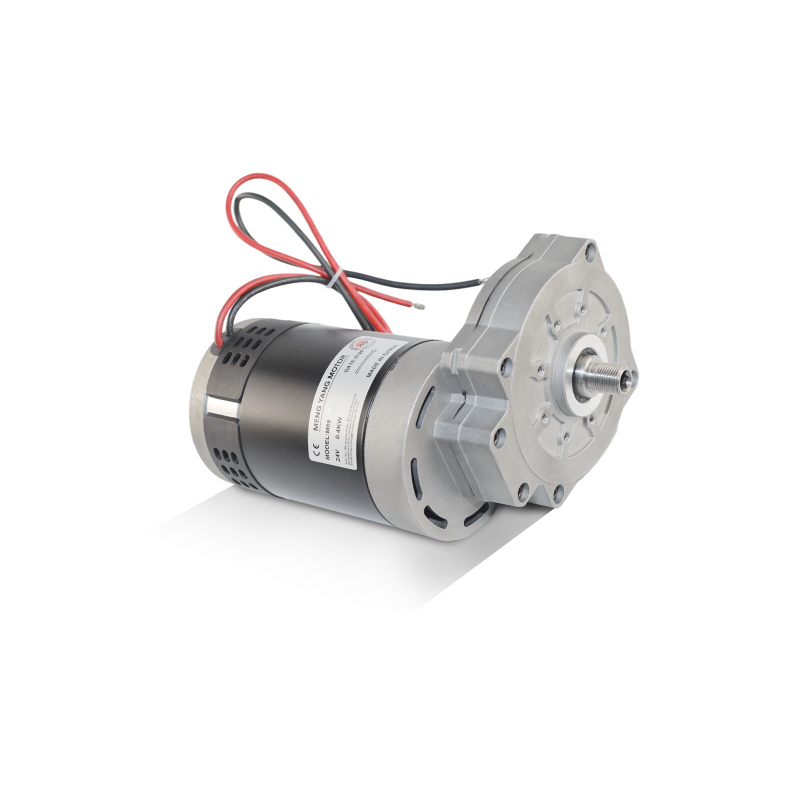 Brushless DC Motor Series for Variable-Speed EquipmentExplore this BLDC motor family, designed for battery-powered and variable-load applications where efficiency across speed range directly affects runtime and maintenance needs.View Product →
Brushed DC Motors
Brushed designs give strong starting torque and very simple control. Brush friction and commutator losses cap their efficiency, yet they remain the sensible choice where cost, control simplicity, and serviceability outweigh a few percentage points of conversion efficiency. Being honest about that trade-off is more useful to buyers than pretending one family wins everywhere.
Where Higher Efficiency Actually Pays Back
The arithmetic is unforgiving and helpful in equal measure. Saving two or three percentage points on a motor that runs 6,000 hours a year is a meaningful sum; the same saving on a machine that runs two hours a week is noise. Before specifying a premium class, estimate annual running hours and how close to rated load the motor will operate.
In industrial and automation settings, where conveyors, fans, and pumps run continuously, higher-class motors and proper sizing usually pay back within a couple of years. In logistics equipment, efficiency translates directly into battery endurance and fewer charging cycles, which operators notice long before they see an energy bill. Construction machinery and commercial vehicles present a different case: there the goal is often to reduce parasitic electrical load so that alternators and starting systems have headroom, and efficient motor designs help keep that balance.
A Practical Specification Checklist
- State the real duty cycle, including hours per day, starts per hour, and how the load varies.
- Confirm the supply, whether direct-on-line or drive-fed, and the voltage and frequency tolerance.
- Choose the efficiency class after, not before, estimating annual running hours.
- Check the mechanical interface, mounting, shaft dimensions, and enclosure protection for the environment.
- Ask how efficiency was verified, and request test data rather than a catalogue claim.
- Consider the total assembly: gearbox, coupling, and control electronics can each waste more than a motor class upgrade saves.
Manufacturing Details That Decide Real Efficiency
Two motors can share a drawing and still perform differently on site. The difference usually sits in process control: lamination stacking pressure, air-gap consistency, winding tension, balance quality, and the integrity of joints in the rotor circuit. Where we use brazed armature connections, for instance, the point is not the process name but the lower resistance and greater mechanical stability it delivers over the life of the unit.
That is why we treat efficiency as a manufacturing discipline rather than a design certificate. Our roughly 70,000 square metre facility and engineering team exist to keep those process variables inside tolerance, batch after batch, across DC, BLDC, and AC lines.
If you are working through a specification and are unsure whether a premium class, a different motor family, or a better-matched frame size will deliver the return you need, send us the duty cycle and let our engineers run the numbers with you. Sometimes the answer is a higher-efficiency motor. Sometimes it is the one you already have, sized correctly. Either way, a short conversation usually saves a long correction later, and you can reach our team here.