 English
 中文简体
中文简体 русский
 Français
 Español
 عربى
عربىEfficiency is the quiet workhorse of electric motor performance. Over nearly three decades of building motors for industry, we have learned that a small difference in efficiency can turn into meaningful energy savings over thousands of operating hours. This article looks at the factors affecting energy efficiency of electric motors, from design and materials to the operating conditions that decide how those motors behave on your floor.
What the Efficiency Rating Really Means
Motor efficiency is the ratio of mechanical output power to electrical input power. If a motor is 90 percent efficient, it turns 90 percent of the electrical energy into useful work and the remaining 10 percent into heat. That heat has to be managed, and it also tells you how much energy is lost inside the motor. The most important losses are copper losses in the windings, iron losses in the magnetic circuit, mechanical losses from friction and fan, and stray load losses caused by leakage fields and manufacturing tolerances.
| Loss category | What pushes it up | Efficiency improvement |
|---|---|---|
| Copper loss | Small conductor cross-section, high current, high temperature | Quality copper windings, better slot fill, lower operating temperature |
| Iron loss | Low-grade steel, thick laminations, high flux density | Thin silicon-steel laminations, optimized magnetic circuit |
| Mechanical loss | Bearing friction, aggressive cooling fan, misalignment | Premium bearings, efficient fan design, correct installation |
| Stray load loss | Unbalanced air gap, rotor/stator geometry, inconsistent manufacturing | Uniform air gap, precise rotor balancing, tight quality control |
Efficiency classes such as IE1, IE2, IE3 and IE4 provide a common language for these trade-offs. The difference between IE2 and IE3 may sound small, but because many motors run for thousands of hours each year, a gain of two or three percentage points can be substantial. Higher classes usually require better conductor materials, lower-loss steel, more careful thermal design and tighter manufacturing control.
Motor Type and Design
Motor type is often the first factor engineers consider, and for good reason. A three-phase induction motor is robust and cost-effective, but a synchronous permanent-magnet motor eliminates rotor slip losses and can offer higher full-load and partial-load efficiency. Brushed DC motors are simple and ideal for certain applications, but brush friction and commutator losses reduce their overall efficiency. Brushless DC motors replace the mechanical commutator with electronic control, so they tend to be more efficient and require less maintenance. The right choice depends on torque, speed range and duty cycle.
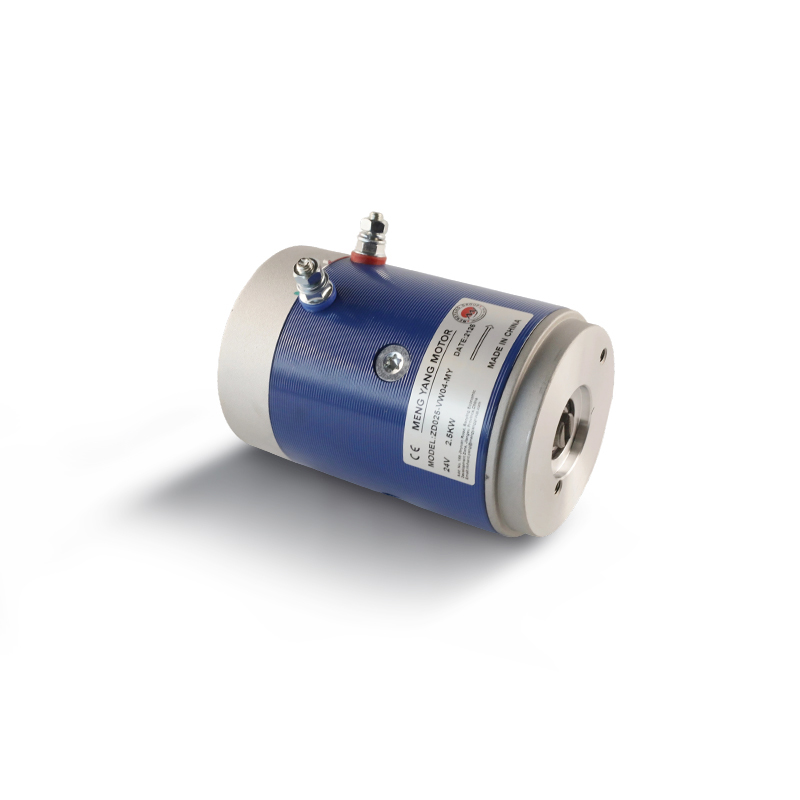 OD78 PM AB Series Brushed DC MotorsDescription: OD78 is a compact high-efficiency permanent magnet DC motor with 78mm outer diameter. It adopts sturdy round housing and flange mounting, designed for lon...View Product →
If your application calls for AC power, remember that efficiency claims should be checked against the motor’s actual speed and torque profile. We explain some of these trade-offs in our practical notes on AC motor efficiency.
Materials and Construction
Materials are where efficiency is won or lost before the motor ever turns. Copper is the standard for stator windings because its lower resistivity reduces I²R loss compared with aluminum. The rotor conductors matter as well; higher-conductivity rotor bars reduce losses and improve overall efficiency. Magnetic steel is equally important. High-grade silicon steel with thin laminations cuts hysteresis and eddy-current losses, and a properly stacked core prevents hot spots and flux distortion.
The air gap between rotor and stator should be as small and uniform as practical. A larger or uneven gap increases magnetizing current and can reduce power factor. Winding fill, insulation thickness and even the varnish treatment also influence heat flow and loss. These are exactly the details we focus on in our IE3 line of aluminium-housed motors, where material selection and controlled manufacturing work together to meet a higher efficiency class.
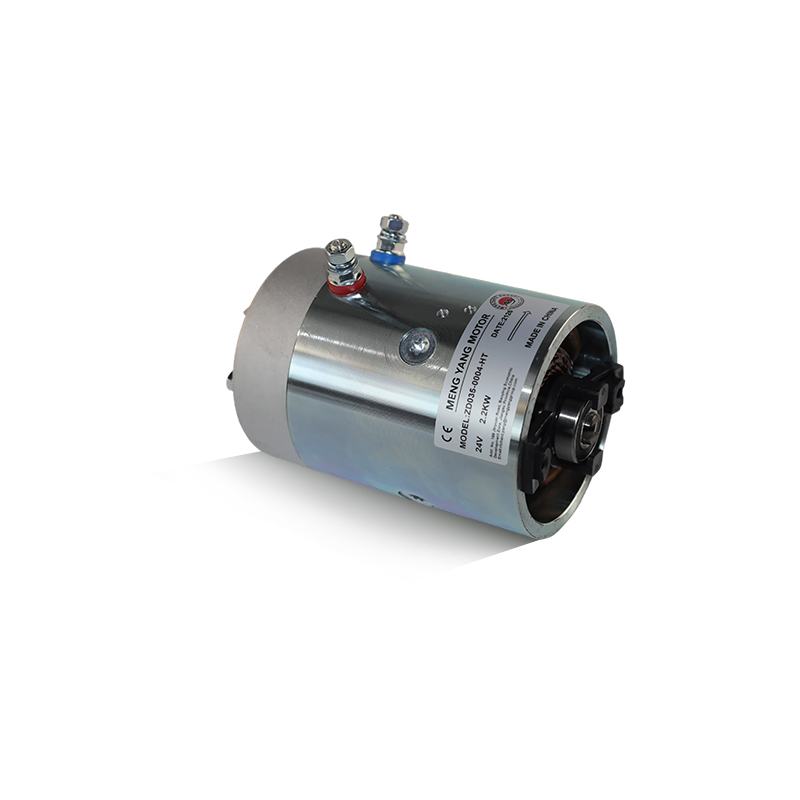 EHBD IE3 Aluminium-Cased MotorEHBD IE3 Aluminium-Cased Motors are high-efficiency three-phase asynchronous motors complying with International Efficiency Class 3. They feature high efficiency, low ...View Product →
Thermal Management and Cooling
Temperature changes efficiency faster than most people expect. Conductor resistance rises as temperature increases, so a hot motor carries higher copper losses. A motor operating in a hot environment, a closed cabinet, or with blocked cooling fins can lose several points of efficiency. Good thermal design—efficient cooling ducts, low-loss fans, and good heat transfer from the stator into the frame—keeps winding temperature down.
If you are selecting a motor, consider the expected ambient temperature and the ventilation conditions of the installation, not just the nameplate rating. In existing motors, keeping cooling surfaces clean is one of the most cost-effective ways to protect efficiency.
When Motor Efficiency Depends on Load and Speed
Load is the operating factor that owners control most directly. A motor selected with a generous safety margin often spends its life running at 40 to 60 percent load, where both efficiency and power factor drop. In general, an induction motor is most efficient around 75 to 100 percent of rated load. Oversizing also increases the first cost and may lower the system efficiency.
Speed control is another practical lever. Instead of running a fixed-speed motor whenever the process needs only half flow, a variable-frequency drive lets the motor match speed and torque to demand. In many cases, the energy saved is greater than the small loss added by the drive.
Power Quality and Supply Conditions
Voltage and frequency affect efficiency too. Balanced three-phase voltage is important; even a small imbalance produces negative-sequence currents that cause extra heating and reduce efficiency. Harmonics can increase iron and copper losses, and a low power factor raises the current that flows through the distribution system, increasing resistive losses before the motor is even reached.
High voltage increases core losses, while undervoltage increases current and copper losses. If you are chasing the last few efficiency points, measure voltage imbalance and harmonic content at the motor terminals as part of your assessment.
Maintenance and Real-World Conditions
After installation, the best efficiency is preserved by maintenance. Worn bearings increase mechanical friction. Misalignment or a flexible coupling with high resistance creates extra torque demand. A dust-clogged fan or blocked cooling fins push the motor temperature upward. Even contamination on stator windings can impair insulation and heat transfer.
A simple schedule of lubrication, alignment checks, cleaning and insulation-resistance testing keeps a good motor efficient over its full working life.
Practical Takeaways
Here are the factors worth checking before you choose or replace a motor:
- Match the motor size to the actual load and avoid long periods of very low load.
- Compare motors over the full duty cycle, not only at full load.
- Check supply voltage balance and power quality on site.
- Keep the motor cool, clean and properly lubricated.
At Mengyang, we have spent decades looking at efficiency from both sides of the motor: as the manufacturer and as the application partner. Whether you need a high-efficiency AC motor for plant machinery, a permanent-magnet DC motor for a specialized vehicle, or a reliable component, the starting point is always a clear understanding of what drives efficiency in your particular application. For industrial automation applications, our engineers can help you match the motor to the load and get the most from every kilowatt-hour.