 English
 中文简体
中文简体 русский
 Français
 Español
 عربى
عربىAsk ten engineers what electric motor applications they work with and you will get ten different answers: a pump skid, a warehouse truck, a tailgate lift, a floor scrubber, a genset, a packaging line. The motor itself is rarely the headline, the application is. That is exactly why we have always started motor projects from the equipment outward rather than from a catalogue inward. Since 1997 our team in Jiangsu has designed and manufactured DC motors, AC motors, brushless motors and vehicle electrics for equipment builders and distributors around the world, and the same lesson keeps repeating: when the application is defined clearly, the right motor usually becomes obvious.
How Electric Motor Applications Shape the Design Brief
Two motors with identical power ratings can behave completely differently in the field. What separates them is the application. Before anyone argues about frame size or efficiency class, our engineers try to pin down five things: the torque the load actually demands at start-up and during running, the duty cycle the machine will see in a normal shift, the environment around the motor, the available power source, and the mechanical interface the machine expects.
A conveyor that runs eight hours at steady load is a very different problem from a hydraulic power unit that stalls and restarts dozens of times an hour. A motor mounted under a sweeper chassis faces dust and vibration that a motor inside a control cabinet never sees. Once those realities are on the table, the discussion shifts from "which motor is strongest" to "which motor belongs here", and that is a far more productive conversation.
A Practical Map of Motor Types and Their Applications
The table below summarises how the main motor families connect to real equipment. Use it as a starting point rather than a final answer, because the details of each machine still decide the final specification.
| Motor family | Typical applications | Why it fits |
|---|---|---|
| Brushed DC motor | Winches, lift gates, hydraulic power packs, vehicle accessories | High starting torque and simple speed control at a low cost |
| Brushless DC (BLDC) motor | Sweeper brush discs, automated guided vehicles, battery-driven pumps | High efficiency, long service life, low maintenance |
| AC asynchronous motor (IEC / NEMA) | Pumps, fans, compressors, conveyors, machine tools | Rugged construction, standardised frames, easy replacement |
| AC synchronous motor | Constant-speed drives and positioning equipment | Running speed locked to supply frequency |
| Gear reduction motor | Conveyors, dock levellers, doors, packaging lines | High torque at low output speed in a compact housing |
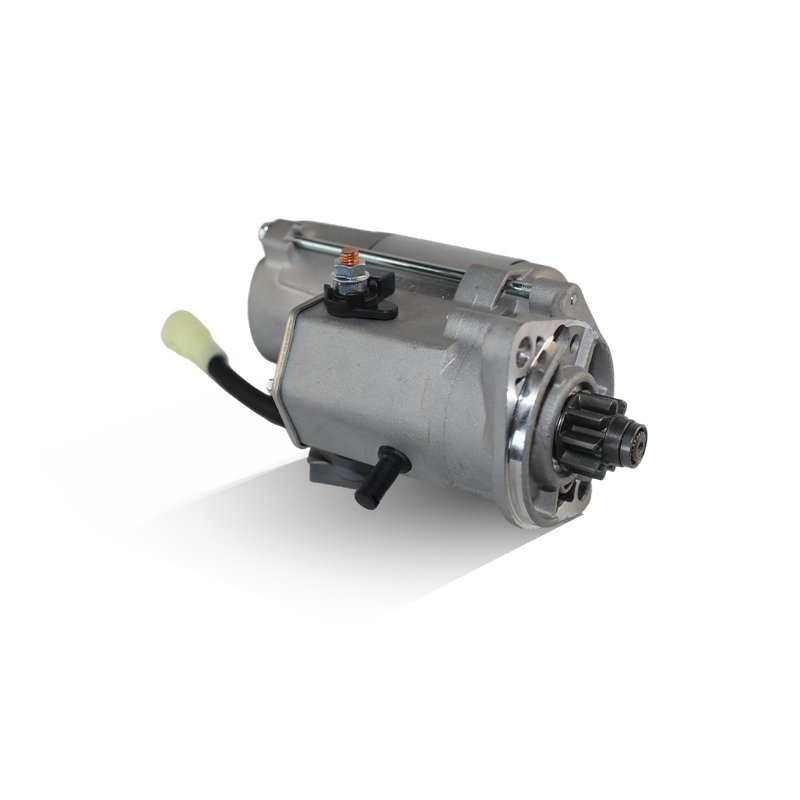
| Starter motor and alternator | Commercial vehicles, construction machinery, engine-driven equipment | Reliable engine cranking and on-board power supply |
Industrial and Automation Applications
General industry remains the largest single block of electric motor applications. Pumps move process fluids, fans and blowers handle air, gearboxes drive conveyors, and machine tools need stable speed under varying cutting loads. In these settings the priorities are usually predictable: a standard mounting footprint, a defined efficiency level, and a supply chain that can deliver the same motor again next year.
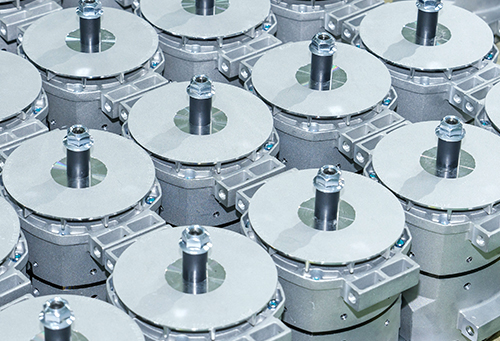
This is where standardised AC motors earn their keep. Our IEC and NEMA asynchronous ranges, including IE3 aluminium-cased units, are built for exactly this kind of duty, and they are complemented by synchronous and gear-reduction variants when a machine needs locked speed or a lower output rpm. You can see how these products map to plant-floor equipment on our industrial and automation overview.
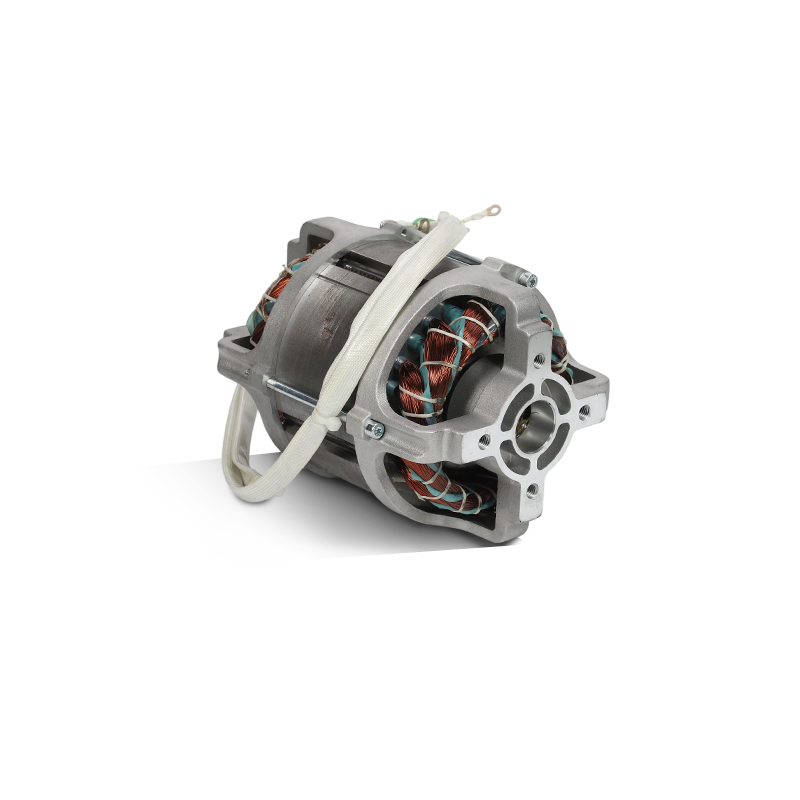 IEC AC Asynchronous Motors FactoryVIEW more AJAB Sub-Oil A Motor AJAB Sub-Oil A MotorView Product →
Material Handling, Logistics, and Warehouse Equipment
Warehouses and distribution centres have quietly become one of the most demanding motor environments anywhere. Storage trucks, counterbalance forklifts, pallet movers and dock levellers all combine frequent starts, heavy loads and tight space. Drive motors and pump motors on these machines are asked to deliver strong low-speed torque while staying compact enough to fit inside the chassis.
Battery-powered equipment adds another requirement: every wasted watt comes straight out of the working shift. That is why brushless designs have spread so quickly here. Our BLDC sweeper brush-disc motor is a good example of a motor developed around a specific machine shape rather than adapted from a general-purpose platform. For a broader look at the equipment we serve, see our intelligent logistics page.
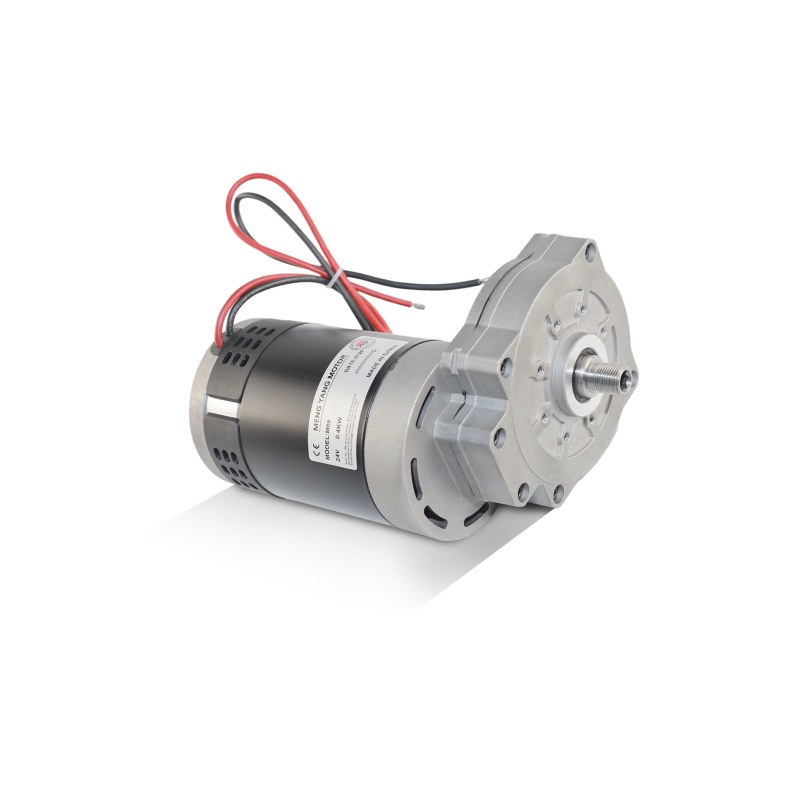 Brushless DC Motor SuppliersVIEW more OD190.5 PM Series Sweeper Family Brush Disc Motor OD190.5 PM Series Sweeper Family Brush Disc MotorView Product →
Commercial Vehicles and Construction Machinery
On vehicles, electric motor applications split into two families: traction-adjacent systems and engine-driven electrics. Starter motors crank the engine thousands of times over a service life, alternators keep the electrical system alive, and auxiliary motors drive steering, electrohydraulic actuators and lifting functions. Construction machinery adds dust, moisture, vibration and wide temperature swings to the list.
Because fleet operators and distributors buy by reference number, this part of the market lives and dies on cross-reference accuracy. Our starter motor and alternator ranges are organised by the major international platform families so that a buyer can match an existing unit quickly, then confirm the details with our team before ordering. Where vehicles are concerned, the first question is never "how big", it is "which platform".
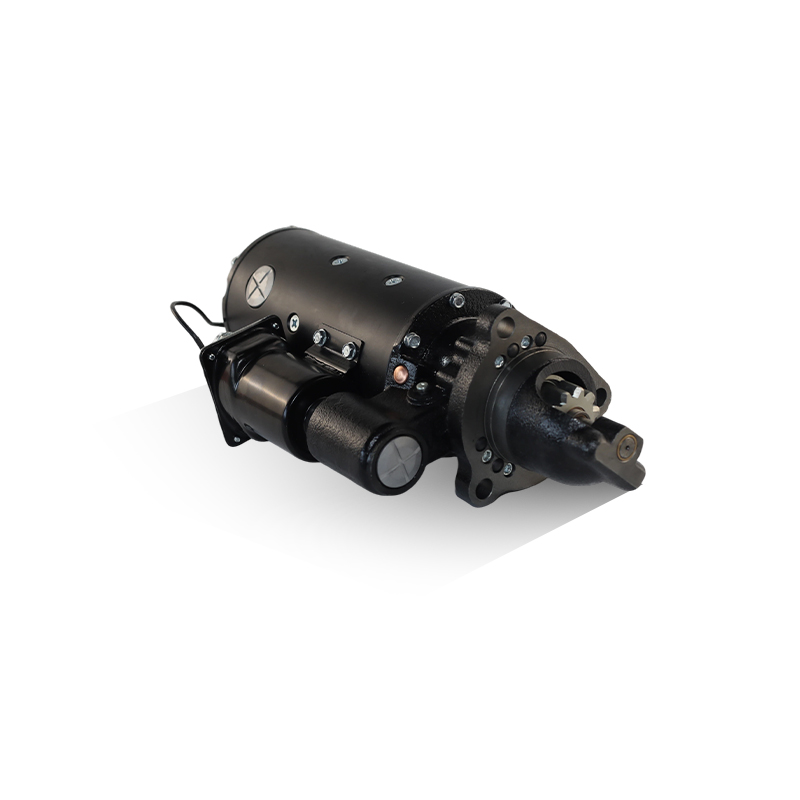 DELCO Starter Motors SuppliersDelco 3905N Specifications SPECS: 12 Volt, CW, 11-Tooth Pinion SPECS FOR: Delco 50MT DD MFR: DELCO MFR SERIES: 50MT Replaces Caterpillar 10R8910, 120-9100, 1508867, 35...View Product →
Specialized Applications: Pumps, HVAC, and Hydraulic Systems
Some of the most interesting electric motor applications sit in narrow niches. Submersible oil pump motors must survive fluid exposure and long vertical shafts. Dock leveller motors are sized around intermittent, high-torque lifting. Car lift motors, counterbalance drive motors and counterbalance pump motors each have their own duty profile, mounting pattern and enclosure expectations. Vehicle lift and hydraulic power unit motors sit at the boundary between industrial automation and mobile equipment.
What these applications share is that a general-purpose motor rarely fits well. They reward a supplier who can adjust windings, shaft geometry, mounting flanges and sealing to suit the machine, and who can keep those modifications consistent across repeat orders. That engineering flexibility is the reason we keep design, manufacturing and quality control under one roof rather than spreading them across partners.
How to Match a Motor to an Application
When a customer sends us a drawing, a photo of a failed unit or simply a description of what the machine must do, we work through roughly the same sequence every time.
- Define the load profile: starting torque, running torque, peak torque and how often each occurs.
- Confirm the power source: AC supply, DC bus, battery voltage and whether a controller is already fixed.
- Establish the duty cycle: continuous, intermittent or short-time, and how many starts per hour.
- Inspect the environment: dust, moisture, temperature range, vibration and any washdown requirement.
- Lock the mechanical interface: frame size, shaft dimensions, flange pattern and available mounting space.
- Decide the control strategy: whether speed regulation happens inside the motor or in an external drive.
- Check serviceability: how easily the unit can be replaced or rebuilt when it eventually wears out.
- Validate with a sample: test in the real machine, not only on a bench.
Steps two and six catch more projects off guard than any others. A motor that performs beautifully on a bench can behave badly once it is tied to an existing controller, and no amount of additional power will fix a mismatch in the control interface.
Common Mistakes in Motor Specification
Over nearly three decades we have seen the same handful of errors repeat across industries, and each one has a cost attached.
- Sizing for average load instead of peak load, which shortens motor life in intermittent applications.
- Ignoring starting current, which then trips protection devices during every start-up.
- Treating efficiency ratings as paperwork rather than as a running-cost decision.
- Choosing a lower-cost enclosure for a dusty or wet environment and paying for it in failures.
- Assuming a similar-looking unit is a drop-in replacement without checking shaft and flange dimensions.
- Leaving the motor supplier out of the machine design conversation until the final week.
None of these are exotic problems, and all of them are cheaper to solve on paper than in the field.
Bringing the Application and the Motor Together
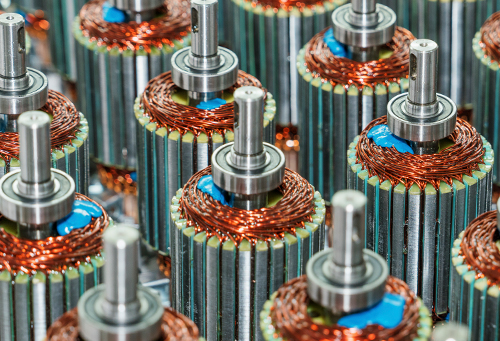
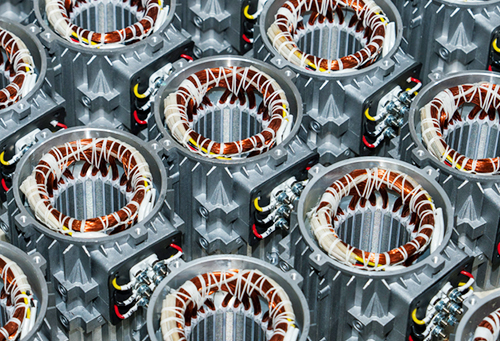
Good electric motor applications are not built by picking the biggest motor from a catalogue. They are built by understanding what the machine does all day, then choosing the motor, the winding, the enclosure and the interface that suit that reality. That is the work our engineering and manufacturing teams have focused on since 1997, and it is why we keep both finished assemblies and core components such as armatures, stators, rotors and regulators available under one roof.
If you are working through a motor selection now, whether for a new machine or a replacement programme, send us the load details, the reference number or even a photo of the failed unit. We will help you narrow the options and confirm a specification before anything is produced.