 English
 中文简体
 русский
 Français
 Español
 عربى
An efficient electric motor is not a single badge on a nameplate. It is the result of a design and application match that keeps more of the electricity you pay for doing useful shaft work. If you have ever felt a motor housing run warm after an hour of steady duty, you have felt efficiency losses leaving as heat. The useful question is not simply “what is the efficiency percentage?” but “where does that percentage sit on my actual load profile?”
What Motor Efficiency Really Measures
Motor efficiency is the ratio of mechanical output to electrical input, usually expressed as a percentage. A motor that draws 100 kW and delivers 95 kW of shaft power is 95% efficient; the remaining 5 kW becomes heat, noise, and electromagnetic loss. That sounds small until the motor runs 6,000 hours a year. At industrial energy prices, a few percentage points can matter more than the purchase price difference between two models.
Well-designed industrial motors often operate in the mid-80s to high-90s at full load, but small motors, part-load operation, and poor voltage quality can pull those numbers down. The table below gives an indicative view, not a guarantee.
| Motor family | Typical full-load efficiency | Where it tends to fit |
|---|---|---|
| Small brushed DC | 60–85% | Low-cost motion, short duty, simple speed control |
| BLDC / permanent magnet | 85–95%+ | Variable speed, compact packages, energy-sensitive systems |
| Standard AC induction (IE2) | 80–93% | General industrial duty where first cost matters |
| Premium AC induction (IE3/IE4) | 87–96%+ | Continuous duty, high annual hours, fan and pump loads |
| Gearmotor system | 50–90% system | High torque at low speed; check the complete drive train |
Those ranges are a starting point for conversation, not a substitute for a datasheet. Two motors of the same power and speed can behave differently at 50% load, and that is often where real equipment spends its day.
Where the Losses Go, and Why Load Matters
Efficiency losses are rarely one thing. In a typical motor you are managing copper losses, iron losses, mechanical losses, and stray load losses. Each responds differently to speed, temperature, and voltage.
- Copper losses rise with current squared. Overload, low voltage, and long cables all increase current for the same output.
- Iron losses come from magnetic cycling in the stator and rotor. Lamination grade, thickness, and manufacturing quality all influence them.
- Mechanical losses include bearings, seals, and windage. A misaligned coupling or over-tensioned belt can quietly cost more than a motor upgrade saves.
- Stray load losses are smaller but real, and they are sensitive to design detail and waveform quality.
- Control losses appear when a variable frequency drive, rectifier, or filter is added. The motor may be efficient while the complete package is less so.
This is why an oversized motor is not automatically an efficient electric motor. A unit running at 20–30% load may have a poor power factor and lower efficiency than a smaller machine running near its design point. The best choice usually sits close to the real duty cycle, not the maximum nameplate rating.
Right-Sizing and the Drive Train
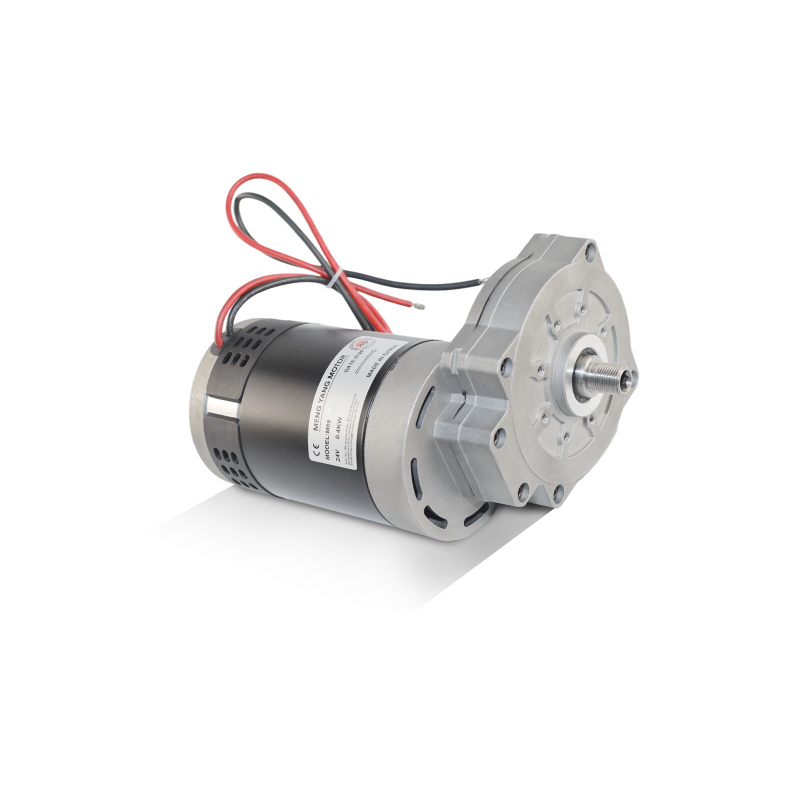
Start with torque, speed, and time. A conveyor that needs high torque at low speed may be better served by a geared motor than by a fast motor with external belts and chains. Every extra stage adds losses, maintenance points, and noise. When the reducer is matched to the duty, the complete drive train can be more compact and more predictable.
For low-speed, high-torque equipment, an asynchronous induction gear motor can remove external transmission losses and simplify installation. We build these units for industrial and logistics applications where space and reliability both matter.
The same logic applies to starting torque, inertia, and duty cycle. A motor selected only by kilowatts may start too hard, run too cool, or waste energy through throttling valves and dampers that could be replaced by speed control.
IE3 and Premium Efficiency: A Practical First Step
Efficiency classes give buyers a common language. IE3 is widely treated as premium efficiency, while IE4 pushes the design further through more active material, better steel, and tighter manufacturing control. For continuous-duty pumps, fans, compressors, and conveyors, moving from an old standard-efficiency motor to an IE3 machine can pay back through energy alone, especially when annual hours are high.
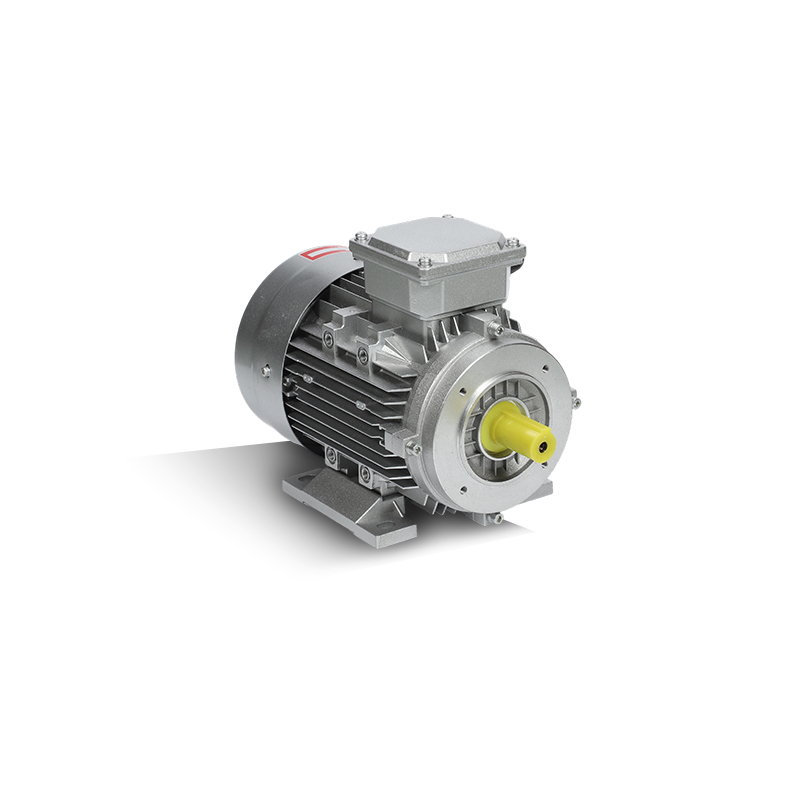
Our IE3 aluminium-cased motors are one example of that practical route: a familiar induction platform with efficiency improvements that fit many general industrial duties. They are not a universal answer, but they are often a sensible first step before considering a more complex drive package.
 EHBD IE3 Aluminium-Cased Three-Phase MotorIE3 aluminium-cased three-phase motor for fans, pumps and general industrial duties; compare actual load profile before choosing a higher efficiency class.View Product →
Check the actual load profile before choosing the highest available class. A premium motor on a lightly loaded, intermittent machine may never recover its extra cost. On a continuously running fan or pump, the calculation usually looks very different.
BLDC and Variable-Speed Options
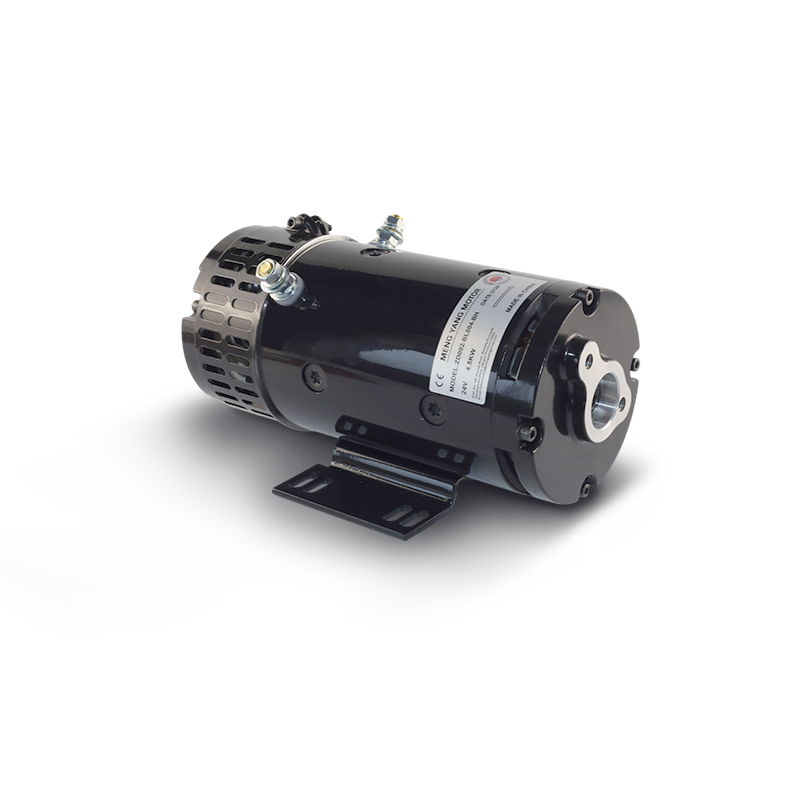
Brushless DC motors use permanent magnets and electronic commutation instead of brushes and a mechanical commutator. That can reduce brush friction and rotor losses, and it often gives a compact package with good speed control. For battery-powered equipment, small pumps, fans, and variable-speed mechanisms, a BLDC design can be a natural fit.
For compact, variable-speed equipment, a BLDC platform is often the better fit than a brushed motor with a gearbox and external controls. Our BLDC range includes designs for specific machine forms, so the motor can be matched to the housing and duty rather than forced into the application.
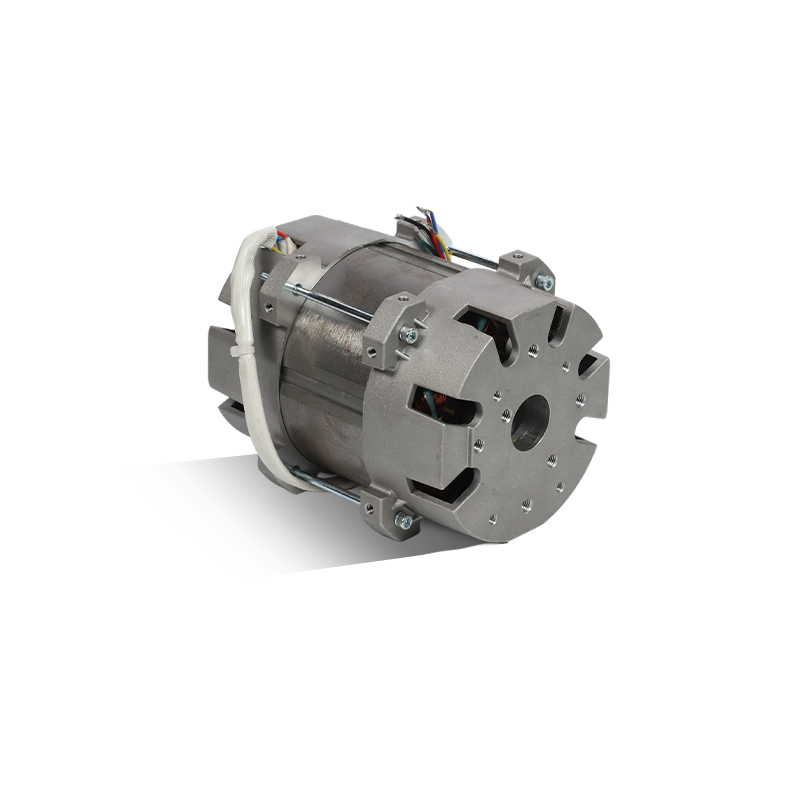
 BLDC Motor Range for OEM and ODM ApplicationsBrushless DC motor range in permanent-magnet and wound-field designs for compact variable-speed equipment; selection depends on controller compatibility and load profile.View Product →
BLDC is not automatically the most efficient choice in every case. It needs a compatible controller, and the controller has its own losses. If the application runs at one fixed speed for long periods, a well-selected induction motor may be simpler and just as economical. If the load varies widely, electronic speed control can capture savings that a fixed-speed motor cannot.
Controls, Installation, and Maintenance
Good hardware can be undone by a poor installation. Voltage imbalance, loose terminals, misalignment, over-greasing, blocked ventilation, and damp windings all reduce efficiency or shorten life. A variable frequency drive can improve part-load performance, but it also adds drive losses and can introduce harmonics if the installation is not planned properly.
In our work with industrial and automation customers, the most common savings come from three simple actions: measuring the real load, correcting the transmission, and replacing a motor only when the duty justifies it. A motor that is cleaned, aligned, and correctly tensioned often performs better than a new premium unit installed badly.
Rewinding deserves a careful look as well. A quality rewind can restore a motor to service, but a poor one can increase losses. For critical continuous-duty machines, compare the rewind cost with the efficiency and reliability of a new IE3 unit rather than assuming the older frame is always the cheaper path.
A Practical Selection Checklist
- List the real torque, speed, and duration for each operating point, not just the maximum.
- Estimate annual hours and energy cost before comparing purchase prices.
- Match the motor and reducer to the load; avoid oversized frames that run at low load.
- Check starting torque, inertia, environment, mounting, and available controls.
- Include drive, gearbox, cable, and maintenance losses in the payback calculation.
- Confirm spare parts and service support for the chosen platform.
An efficient electric motor is ultimately a system decision. The nameplate matters, but so do the load curve, the transmission, the controller, and the person who maintains it.
At Mengyang, we have been manufacturing motors since 1997, and we have learned that the most useful conversations start with the application rather than the catalog page. Our team works across DC, AC, BLDC, starter, alternator, and armature product lines, so we can look at the whole drive train instead of only the motor. If you are weighing an IE3 induction motor against a BLDC design, or simply trying to replace an oversized unit, talk to our team and bring your duty cycle with you.