 English
 中文简体
中文简体 русский
 Français
 Español
 عربى
عربىWhen we talk about electric motor optimization, we are not just referring to a set of theoretical design calculations. In our 25+ years of manufacturing motors for everything from commercial vehicles to industrial automation, we have learned that true optimization is a hands-on process that balances material science, precision engineering, and real-world application demands. Whether you are building a conveyor system, a forklift, or a construction machine, the goal remains the same: get the most power and efficiency out of the smallest, most reliable package possible. Below, we share the practical approaches we use every day to optimize our motors, from the raw materials we select to the final tests we run on the factory floor.
Choosing the Right Materials for Optimal Motor Performance
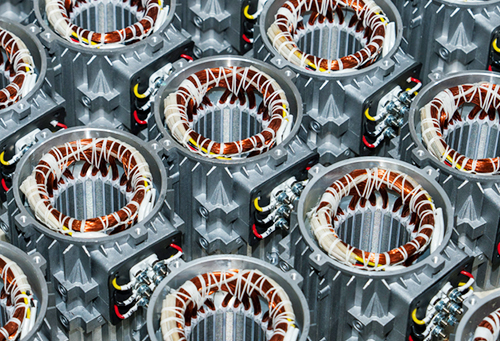
The foundation of any well-optimized electric motor lies in its materials. We have seen many designs fail not because of poor geometry, but because the chosen materials could not handle the thermal, magnetic, or mechanical stresses of the intended application. When we optimize a motor, we start with the core components: the magnetic steel laminations, copper windings, and permanent magnets. High-grade silicon steel with low core loss is essential for reducing eddy currents and hysteresis losses. For the windings, we use pure electrolytic copper with precise turn counts to balance torque and speed characteristics. In our 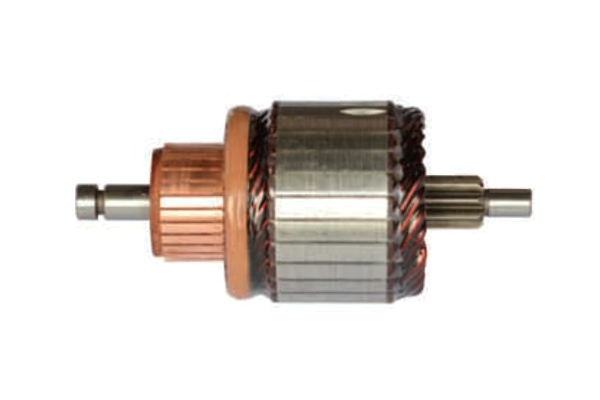 MY104 DC Motor for Industrial ApplicationsExplore the MY104 motor in the context of material-based optimization. Its design emphasizes robust copper windings and laminations, aligning with the discussion on selecting high-grade components for reliable performance.View Product → armature production, we employ brazing techniques that ensure robust electrical connections and minimal resistance—one of the small but critical details that separates a standard motor from an optimized one.
Design Optimization – Tailoring Motor Architecture to Your Application
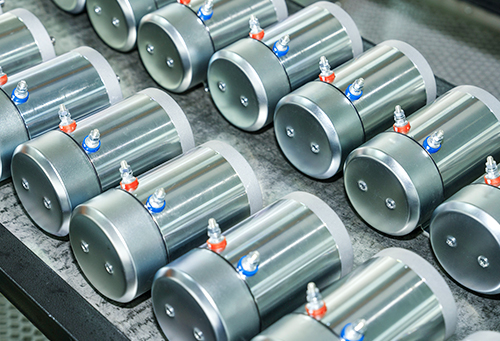
Once the right materials are selected, the next step is to refine the motor’s electromagnetic and mechanical design. We do not believe in a one-size-fits-all approach. For example, our brushed DC motors are available in various frame sizes and winding configurations to match different torque-speed curves. The 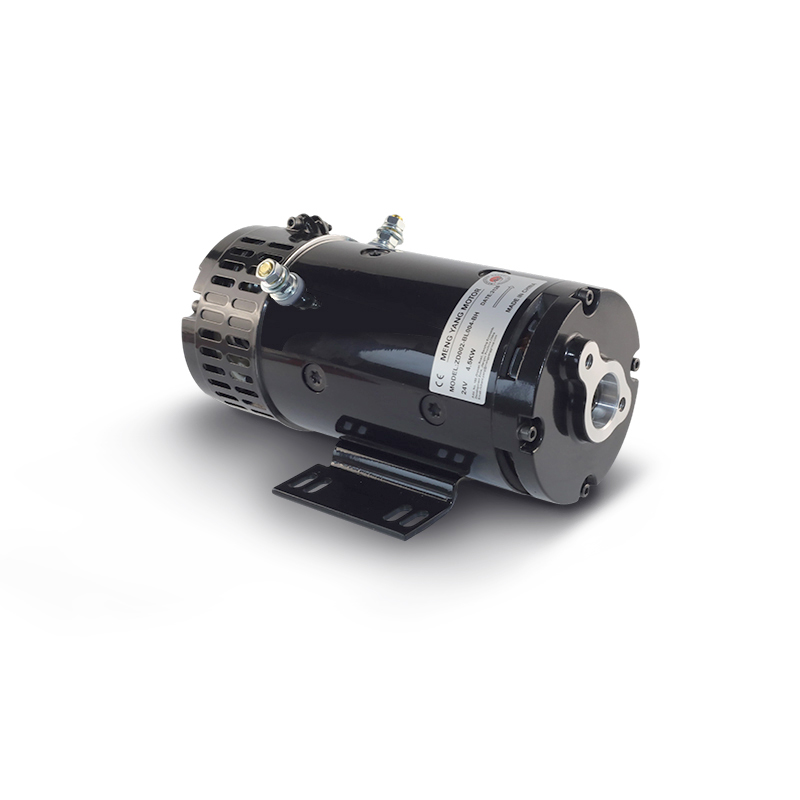 OD114 Wound-Field H-Series Brushed DC MotorThis compact 114mm brushed DC motor delivers 500W–2200W with strong starting torque, ideal for hydraulic pumps and winches. Its H-type end cover and IP54 rating suit heavy-duty industrial vehicles.View Product → OD114 wound-field H-series, for instance, is designed for high starting torque applications such as hydraulic pumps and winches. By optimizing the number of turns, wire gauge, and magnetic circuit geometry, we can shift the motor’s performance envelope to match exactly what the customer needs—whether that is maximum efficiency at a single operating point or a wide constant-power range.
For AC motors, we focus on rotor bar design and slot geometry to reduce harmonics and improve power factor. Our 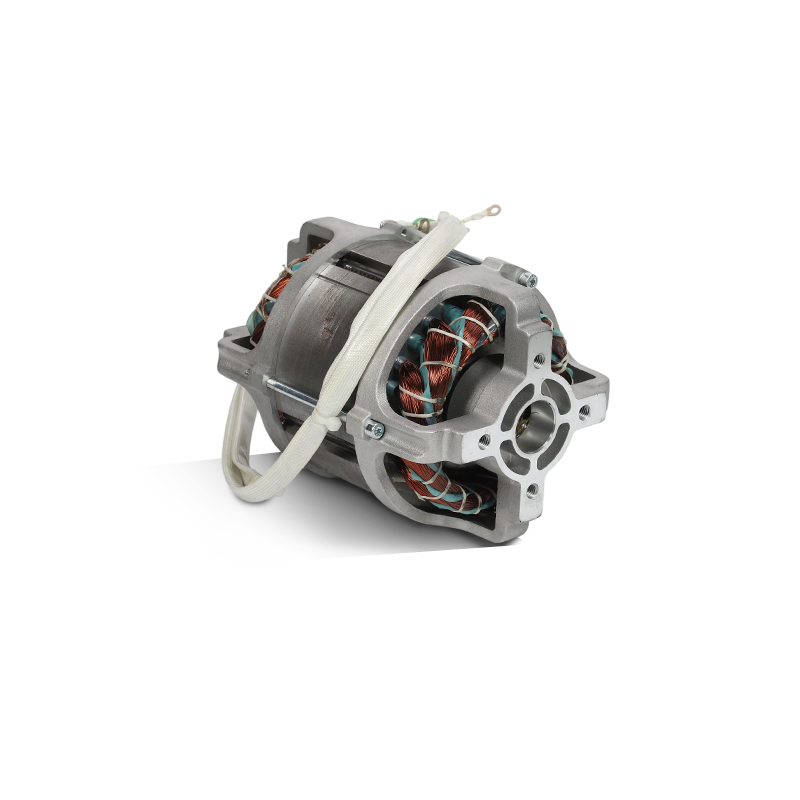 IEC AC Asynchronous Motor Series with IE3 EfficiencyThese industrial asynchronous motors are optimized for energy efficiency and harmonic reduction. Rotor bar geometry and finite element analysis improve power factor, meeting IE3 standards for demanding environments.View Product → IEC asynchronous motors are optimized for industrial environments where energy efficiency standards like IE3 are mandatory. We use finite element analysis during the design phase to simulate flux distribution and thermal hotspots, allowing us to iterate quickly without building multiple physical prototypes. This simulation-driven optimization helps us reduce material usage without sacrificing performance, a win-win for both cost and sustainability.
Rigorous Testing and Quality Assurance
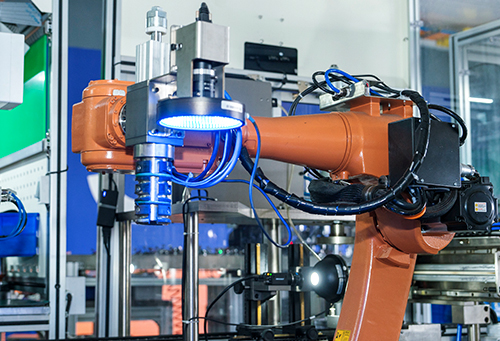
No matter how sophisticated the design, optimization must be verified through testing. In our 70,000-square-meter facility, every motor we manufacture undergoes a series of performance and endurance tests. We measure key parameters such as no-load current, locked-rotor torque, efficiency at multiple load points, and temperature rise. These tests not only confirm that the motor meets its specifications but also reveal areas for further refinement. For instance, if we observe higher-than-expected winding temperatures, we may adjust the cooling fan design or change the insulation system. We also conduct vibration and noise analysis to ensure the motor runs smoothly, which is especially critical for applications like intelligent logistics equipment where quiet operation is valued.
Quality assurance does not end in the test lab. We have implemented statistical process control across our production lines to catch variations before they become defects. By tracking key dimensions—such as air gap uniformity, commutator roundness, and bearing preload—we maintain consistent performance from the first motor to the thousandth. This commitment to consistency is what allows our customers to rely on our motors for mission-critical applications in construction machinery and commercial vehicles.
Application-Specific Motor Optimization
Every industry has its own set of operating conditions that demand specific optimization priorities. In the world of commercial vehicles, for example, starter motors must deliver high torque in a very short burst while enduring extreme temperature and vibration. Alternators, on the other hand, need to maintain high efficiency across a wide speed range to charge batteries effectively. Our Delco-style alternator series (10SI through 40SI) is optimized for these exact challenges: we select rectifier bridges with lower forward voltage drop and use precision-wound stators to minimize iron losses.
For industrial automation, we design AC motors with low starting current and high overload capacity. Our dedicated IEC motor line includes models that are direct replacements for European and North American standard frames, making it easy for system integrators to upgrade their equipment without redesigning the mounting. In the smart logistics sector, we offer specialized drive motors for storage trucks and pallet movers, where the motor must be compact yet capable of frequent start-stop cycles. By customizing parameters like rotor inertia and winding inductance, we achieve optimal response times and energy recovery.
Ultimately, electric motor optimization is not a one-time event; it is an ongoing partnership between the manufacturer and the user. We encourage our customers to share their duty cycles, environmental conditions, and performance targets so we can tailor the motor accordingly. Whether you need a standard AC motor for a pump or a custom-wound DC motor for a special vehicle, the principles remain the same: choose the best materials, refine the design through simulation and testing, and never compromise on quality.
At Mengyang, we take pride in our ability to optimize motors for the real world—not just on paper. With a factory that spans seven hectares and a team that includes engineers who have been in this industry for decades, we have the resources and expertise to help you get the most out of your electric motor investment. If you are looking to improve the efficiency, reliability, or power density of your application, we invite you to reach out. Let us put our 25+ years of motor optimization experience to work for you.