 English
 中文简体
中文简体 русский
 Français
 Español
 عربى
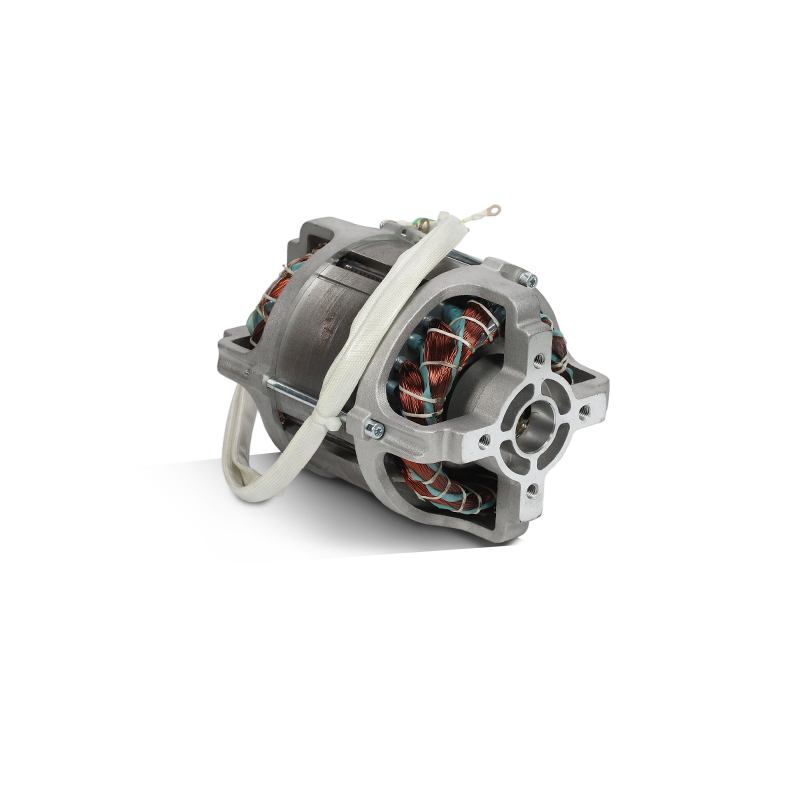
عربىStarter motors are electric motors that crank an internal combustion engine from rest to its self-sustaining firing speed, typically 100 to 300 RPM, by converting electrical energy from the battery into the rotational mechanical energy needed to turn the crankshaft. There are four principal types of starter motors in commercial use today: the conventional direct-drive starter, the planetary gear reduction starter, the permanent magnet gear reduction (PMGR) starter, and the pre-engaged starter. Among global manufacturers, DENSO Starter Motors are the dominant OEM choice for Japanese vehicles and increasingly for European and American platforms, known for their compact permanent magnet designs and exceptional durability. DELCO Starter Motors, produced by ACDelco (part of General Motors), are the standard for General Motors vehicles and remain widely used across North American truck and heavy-equipment applications. MITSUBISHI Starter Motors, manufactured by Mitsubishi Electric, are OEM equipment on Mitsubishi and several other Asian vehicle brands and are particularly well regarded in the commercial vehicle and marine diesel segment. Choosing the correct starter for an application requires matching the motor's output power (measured in kilowatts), pinion tooth count, mount geometry, and voltage to the engine and vehicle specifications.
How Starter Motors Work: The Electrical and Mechanical Principles
All starter motors share the same fundamental operating principle: they use the force generated between a magnetic field and a current-carrying conductor (the Lorentz force) to produce rotational torque. When the ignition key is turned or the start button is pressed, the battery supplies current to a solenoid mounted on the starter motor. The solenoid performs two simultaneous functions: it closes the main power circuit that delivers high current from the battery to the motor windings, and it mechanically pushes the pinion gear out along a splined shaft so it meshes with the ring gear on the engine flywheel.
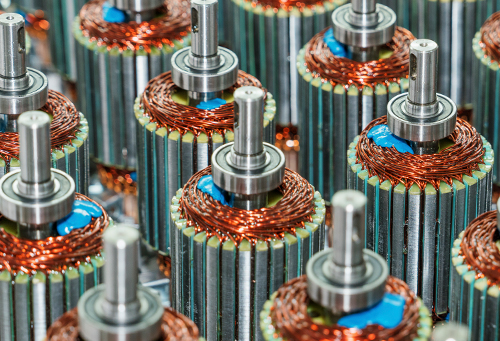
Once the circuit is closed, 200 to 600 amperes flow from the battery through the motor windings, generating a strong rotating magnetic field that spins the armature. The spinning armature drives the pinion gear, which turns the flywheel ring gear, which cranks the engine. As soon as the engine fires and exceeds starter motor speed, an overrunning clutch within the pinion assembly allows the ring gear to spin faster than the pinion without back-driving the motor armature, protecting the starter from damage. The solenoid then retracts the pinion and opens the main circuit when the ignition key is released.
Key Performance Parameters of Starter Motors
When selecting or comparing starter motors, the following technical parameters are the most important:
- Output power (kW): The mechanical output at the pinion shaft. Automotive starters range from 0.6 kW for small motorcycles to 11 kW or more for large diesel trucks. Most passenger car starters fall in the 0.8 to 2.5 kW range, while light truck and SUV starters typically range from 1.4 to 3.0 kW.
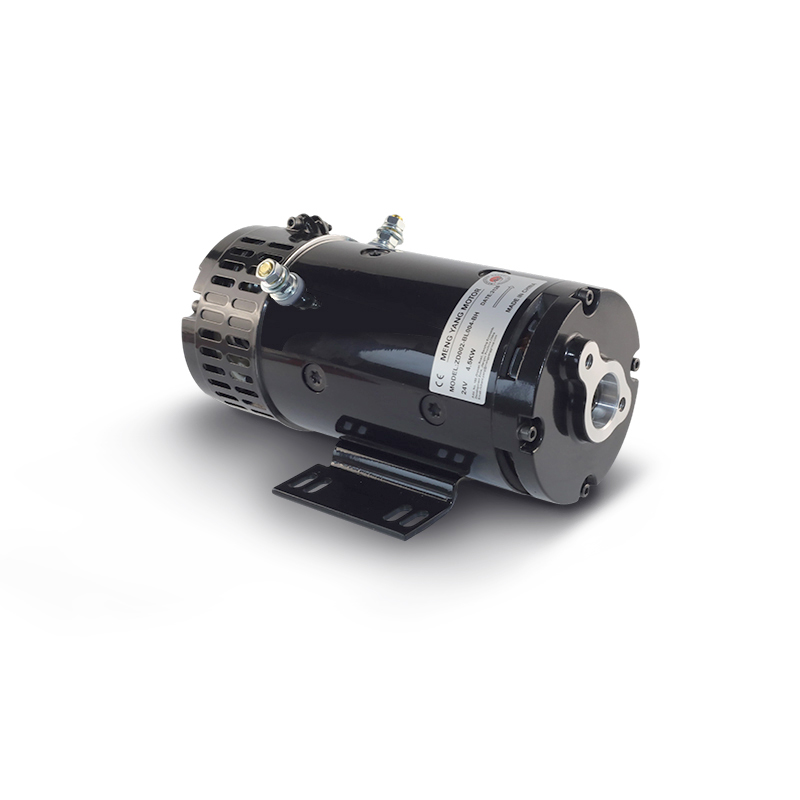
- Voltage: 12 volt for the vast majority of passenger vehicles and light trucks. 24 volt for heavy trucks, large diesel equipment, buses, and marine applications. Some vintage vehicles and specialist equipment use 6 volt starters.
- No-load speed: The RPM of the pinion when the motor runs with no load applied. Typically 3,000 to 8,000 RPM for gear reduction starters; the gear reduction ratio (typically 3:1 to 5:1) steps this down to the cranking speed applied to the flywheel ring gear.
- Stall torque: The maximum torque the motor produces when the output shaft is held stationary. This is the critical parameter for starting very cold engines with high oil viscosity.
- Pinion tooth count and module: Must exactly match the ring gear on the specific engine. Common pinion tooth counts are 9, 10, 11, 12, and 13 teeth. The gear module (the ratio of pitch diameter to tooth count) must also match; common modules are 2.0, 2.5, and 3.0 mm.
Types of Starter Motors: A Complete Technical Guide
The four major types of starter motors differ in their mechanical architecture, the method by which the pinion engages the ring gear, and the type of magnetic field generation used. Each design has specific advantages that suit it to particular applications, vehicle classes, and power requirements.
Type 1: Conventional Direct Drive Starter Motor
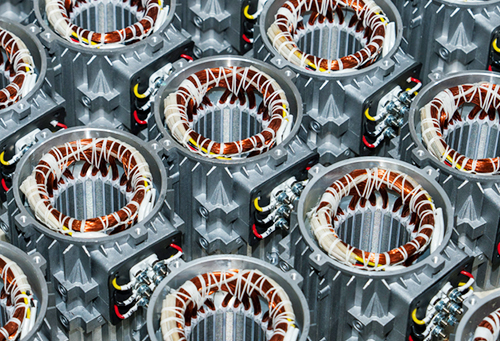
The conventional direct drive starter is the oldest design, developed in the 1910s and used on virtually all vehicles until the 1970s. In this design, the motor armature shaft and the pinion shaft are the same component or directly coupled, meaning the armature rotates at the same speed as the pinion. Because engines require cranking at approximately 100 to 200 RPM and starters are most efficient at much higher RPM, direct drive starters must produce high torque at relatively low speed, which requires a large, heavy motor.
Direct drive starters use wound field coils (electromagnetic windings) to generate the magnetic field, which consumes additional current but produces a strong and controllable field. Typical weight for a direct drive starter on a passenger vehicle engine is 4 to 7 kg. Despite being superseded by more compact designs in most automotive applications, direct drive starters remain in service on older vehicles, some agricultural equipment, and certain industrial engines where robustness and ease of repair are prioritised over compactness. Brushes and commutator segments are the primary wear items, typically requiring service after 150,000 to 250,000 start cycles.
Type 2: Planetary Gear Reduction Starter Motor
The planetary gear reduction starter addresses the efficiency problem of the direct drive design by allowing the motor to spin at its most efficient speed (typically 3,000 to 6,000 RPM) while stepping down the output speed through an internal planetary gearset before reaching the pinion. The planetary gear reduction typically provides a reduction ratio of 3:1 to 5:1. This means the motor armature spins 3 to 5 times faster than the pinion, allowing the motor to be significantly smaller and lighter while producing the same or greater torque at the pinion.
The planetary gearset consists of a sun gear on the armature shaft, a ring gear fixed to the motor housing, and three or four planet gears that orbit between the sun and ring gears. The planet gear carrier is connected to the pinion shaft. This arrangement is mechanically efficient (typically 85 to 92% gear efficiency), compact, and durable, as the load is shared equally among the multiple planet gears. The planetary gear reduction starter became the dominant design for automotive and light truck applications from the 1980s onward and remains the most common architecture for starters with wound field coils in the 1.5 to 3.5 kW output range.
Type 3: Permanent Magnet Gear Reduction (PMGR) Starter Motor
The permanent magnet gear reduction (PMGR) starter replaces the wound field coils of conventional designs with powerful permanent magnets (typically rare-earth neodymium-iron-boron magnets in premium designs, or ferrite magnets in cost-optimised designs) to generate the stator magnetic field. Eliminating the wound field coils reduces current consumption, removes a source of heat generation, and allows the motor to be made significantly smaller and lighter for the same output power.
A PMGR starter on a typical 1.5 kW application weighs approximately 1.8 to 2.8 kg, compared to 3.5 to 5.0 kg for an equivalent wound field planetary gear reduction starter. This weight reduction is significant for vehicle fuel efficiency (through reduced rotating and unsprung mass) and for installation in tight engine compartments. The PMGR design is the standard architecture for DENSO Starter Motors on modern Japanese vehicle platforms and is increasingly specified by European manufacturers for petrol engine applications. The primary limitation of permanent magnet designs is their greater sensitivity to high temperatures: strong rare-earth magnets can lose magnetisation permanently if exposed to temperatures above approximately 150 to 180 degrees Celsius, which constrains their use on very hot engine installations without thermal management.
Type 4: Pre-Engaged Starter Motor (Inertia Drive vs. Pre-Engaged)
The distinction between pre-engaged and inertia drive (also called Bendix drive) starters is about the method of pinion engagement rather than the motor type itself, but it is an important classification in the field of starter motor types.
An inertia drive (Bendix) starter uses the inertia of the spinning armature to throw the pinion outward along a helical thread on the shaft, meshing it with the ring gear under the force of its own rotational momentum. When the engine fires and the ring gear speeds up, the pinion is spun back along the thread and disengages. This design is simple and inexpensive but can cause gear clash and wear, and the helical thread mechanism is prone to jamming if the thread becomes corroded or contaminated.
A pre-engaged starter uses the solenoid to push the pinion into mesh with the ring gear before the main motor circuit is energised. The engagement sequence is: solenoid activates, pinion pushes into ring gear, main contacts close, motor spins. This controlled engagement sequence prevents gear clash, reduces wear on both pinion and ring gear, and allows the use of a stronger, more positive engagement mechanism. Virtually all modern automotive starter motors are of the pre-engaged type. The pre-engaged design is used across all three major manufacturers discussed in this article.
| Starter Type | Weight | Efficiency | Primary Applications | Key Advantage |
|---|---|---|---|---|
| Direct Drive | 4 to 7 kg | Moderate | Older vehicles, agricultural, industrial | Simplicity, field repairability |
| Planetary Gear Reduction | 3 to 5 kg | Good | Trucks, diesel engines, heavy duty | High torque, durability |
| Permanent Magnet Gear Reduction (PMGR) | 1.8 to 3 kg | Excellent | Passenger cars, modern petrol engines | Compact, lightweight, low current draw |
| Pre-Engaged (engagement method) | Varies by motor type | Varies | All modern automotive applications | Smooth engagement, reduced ring gear wear |
DENSO Starter Motors: Design Philosophy, Product Range, and Applications
DENSO Starter Motors are manufactured by DENSO Corporation, a global Tier 1 automotive supplier headquartered in Kariya, Aichi Prefecture, Japan. DENSO is the world's second largest automotive components supplier by revenue and has been manufacturing electrical starting systems since the 1950s. DENSO starter motors are OEM equipment on Toyota, Lexus, Honda, Mazda, Subaru, Suzuki, and Daihatsu vehicles, as well as on many European and North American platforms where Japanese electrical components are specified. DENSO's aftermarket brand distributes replacement starters globally under the DENSO name, offering both OEM-identical remanufactured units and new production aftermarket starters.
DENSO Starter Motor Design Characteristics
The defining characteristic of modern DENSO Starter Motors is their consistent use of the permanent magnet gear reduction (PMGR) architecture for passenger car and light truck applications. DENSO was one of the earliest manufacturers to commercialise the PMGR design at scale, beginning in the mid-1980s, and has refined this architecture across several generations. Key design features of DENSO PMGR starters include:
- High-field neodymium-iron-boron magnets: DENSO's premium passenger car starters use NdFeB rare-earth magnets that produce a stronger magnetic field per unit volume than ferrite magnets, allowing the motor to be smaller for the same output while maintaining cold-weather starting performance.
- Copper-coated aluminium armature windings: In some high-volume passenger car starters, DENSO uses copper-coated aluminium wire for armature windings to reduce weight further while maintaining adequate conductivity. Aluminium has approximately 60% of the conductivity of copper at 30% of the density, providing a net weight reduction when cross-section is increased to compensate for conductivity.
- Integrated solenoid housing: DENSO starters typically incorporate the solenoid assembly within the main starter body in a compact integrated package, reducing overall installed length compared to designs with externally mounted solenoids.
- Idle stop and start system starters: DENSO has developed enhanced starter motors specifically for vehicles equipped with idle stop-start systems (also called micro-hybrid or auto start-stop). These starters must perform 10 to 20 times more start cycles per day than a conventional starter and are engineered with reinforced brushes, heavy-duty overrunning clutches, and enhanced thermal management to handle this increased duty cycle. DENSO supplies stop-start starters for Toyota and Lexus hybrid platforms and for numerous European vehicle brands.
DENSO Starter Motor Product Range and Output Classes
The DENSO Starter Motors product range covers output ratings from 0.8 kW for small four-cylinder petrol engines to 5.5 kW for large diesel truck engines. The most widely sold DENSO passenger car starters in the aftermarket fall in the 1.0 to 1.6 kW range, covering the majority of Japanese vehicle applications in markets from North America to Australia to Southeast Asia. DENSO also manufactures 24-volt industrial and marine starters in the 4 to 7 kW range for commercial diesel applications, though this segment is a smaller portion of their total starter motor volume compared to the light vehicle passenger car market where their PMGR designs are strongest.
DELCO Starter Motors: Heritage, Engineering, and North American Market Presence
DELCO Starter Motors are produced under the ACDelco brand, which is the parts and accessories business of General Motors. The Delco name in automotive electrical systems dates to 1909, when Charles Kettering founded the Dayton Engineering Laboratories Company (Delco) and invented the first commercially successful electric starter motor, installed in the 1912 Cadillac. This innovation eliminated the dangerous hand-cranking required to start early automobiles and transformed motoring from an athletic endeavour into an accessible everyday activity.
Today, DELCO Starter Motors under the ACDelco brand are the specified OEM and aftermarket replacement for General Motors vehicles including Chevrolet, GMC, Buick, Cadillac, and their commercial truck lines. ACDelco starters are also widely used as replacement units on non-GM vehicles in North America due to their broad availability through GM's extensive dealer and distributor network.
DELCO Starter Motor Engineering Strengths
DELCO Starter Motors have historically been engineered with particular strength in the heavy-duty truck and high-displacement V8 engine segment. The wound field planetary gear reduction design used in many ACDelco starters for truck and SUV applications provides the high stall torque required to crank large displacement petrol and diesel engines, including the 6.6-litre Duramax diesel used in GM heavy-duty pickup trucks. Key engineering characteristics of DELCO starters:
- High-torque wound field design for large engines: For GM's big block V8 and large diesel applications, ACDelco uses wound field coils rather than permanent magnets, as wound field designs provide higher stall torque and are more robust under the sustained high-current cranking demands of cold-weather diesel starting.
- Positive engagement (pre-engaged) mechanism: All modern DELCO starters use the pre-engaged design with solenoid-controlled pinion extension, providing clean mesh with the ring gear and protection of the overrunning clutch from shock loads.
- ACDelco Gold and Professional series distinction: ACDelco markets DELCO Starter Motors under two quality tiers. The ACDelco Gold (previously Professional) series uses new components throughout and is the replacement for OEM applications. The ACDelco Advantage series uses a combination of new and remanufactured components at a lower price point for budget-sensitive replacements where OEM-quality longevity is not the primary concern.
- OEM-matching mounting and electrical specifications: Because ACDelco is the GM parts brand, DELCO Starter Motors for GM vehicles are manufactured to the same dimensional and electrical specifications as the original equipment starters, ensuring correct fit and function without modification.
DELCO High-Torque and Mini Starter Legacy
One of the most commercially important innovations in DELCO Starter Motors history was the introduction of the mini high-torque starter in the 1980s for GM's small block V8 engines. Earlier GM starters for V8 engines were large, heavy direct-drive units weighing 7 to 10 kg. The Delco mini high-torque starter introduced a compact planetary gear reduction design that reduced weight to approximately 3.5 to 4.5 kg while maintaining or improving cranking torque. This starter became enormously popular in the performance aftermarket because its compact size allowed installation in high-compression and stroked performance engines where the original large starter would not fit between the headers and oil pan. Decades later, the aftermarket for mini high-torque starters compatible with the GM small block and LS engine families remains very active, with numerous manufacturers offering direct-fit replacements to the Delco original design.
MITSUBISHI Starter Motors: Commercial Vehicle Strength and Global OEM Coverage
MITSUBISHI Starter Motors are manufactured by Mitsubishi Electric Corporation's Automotive Equipment Division, headquartered in Tokyo, Japan. Mitsubishi Electric is one of the world's largest manufacturers of automotive electrical components and has produced starter motors and alternators since the 1920s. MITSUBISHI Starter Motors are OEM equipment on Mitsubishi Motors vehicles (including Outlander, Eclipse Cross, L200 truck, and Delica commercial van), and are also specified as OEM on numerous other vehicle brands manufactured by Mitsubishi-aligned companies and by international manufacturers that source electrical components from Mitsubishi Electric's global supply network.
MITSUBISHI Starter Motor Technical Strengths
MITSUBISHI Starter Motors are particularly well regarded in the commercial vehicle, marine diesel, and construction equipment segments, where the durability of the wound field planetary gear reduction design in demanding duty cycle conditions has established a strong reputation. Specific technical strengths of Mitsubishi Electric starters include:
- Wide output range for commercial diesel: Mitsubishi Electric produces starters from 0.8 kW for small passenger car petrol engines up to 11 kW for large construction equipment and marine diesel engines. This broad range makes Mitsubishi Electric a single-source supplier for vehicle manufacturers building everything from small cars to heavy trucks and marine vessels.
- 24 volt heavy duty product depth: Mitsubishi Electric's 24-volt starter range for trucks, buses, and construction equipment is particularly comprehensive, with multiple mounting configurations, output ratings, and pinion specifications covering the major diesel engine families used in Asian, European, and North American commercial vehicles.
- Reduction gear integration for diesel applications: MITSUBISHI Starter Motors for large diesel applications typically use a robust planetary gear reduction with case-hardened steel planet gears and a heavy-duty overrunning clutch designed to withstand the very high starting torque of large diesel engines in cold weather conditions, where oil viscosity multiplies the torque required to turn the engine over.
- Thermal performance in hot start conditions: Mitsubishi Electric has invested significantly in the thermal performance of its starters for applications in hot climates and under-bonnet temperatures exceeding 120 degrees Celsius, using high-temperature brush and commutator materials and sealed bearing assemblies that retain lubrication at elevated temperatures where cheaper starters experience premature failure.
MITSUBISHI Starter Motors in the Aftermarket
In the global aftermarket for starter motors, MITSUBISHI Starter Motors are sold as OEM-equivalent replacements for the large installed base of Mitsubishi-brand vehicles and equipment worldwide. They are also widely used as cross-reference replacements for starters on other Japanese and Korean vehicle brands where the original starter shares dimensional and electrical specifications with a Mitsubishi Electric design. The aftermarket offers both new Mitsubishi Electric production starters and remanufactured units where original cores are rebuilt to new specifications, offering a more economical option for fleet operators where the volume of starters consumed makes cost per unit a significant consideration.
Comparing DENSO, DELCO, and MITSUBISHI Starter Motors: Application Guide
| Criterion | DENSO Starter Motors | DELCO Starter Motors | MITSUBISHI Starter Motors |
|---|---|---|---|
| Headquarters | Kariya, Japan | Detroit, USA (ACDelco/GM) | Tokyo, Japan (Mitsubishi Electric) |
| Primary motor type | PMGR (permanent magnet) | Wound field planetary and PMGR | Wound field planetary (diesel) and PMGR (petrol) |
| Output range | 0.8 to 5.5 kW | 1.0 to 6.6 kW | 0.8 to 11 kW |
| Primary OEM brands | Toyota, Honda, Mazda, Subaru | Chevrolet, GMC, Cadillac, Buick | Mitsubishi, Fuso, selected Asian brands |
| Strongest segment | Passenger car, stop-start systems | North American trucks and SUVs | Commercial diesel, marine, construction |
| 24 volt product depth | Moderate | Moderate | Extensive |
| Aftermarket availability | Excellent globally | Excellent in North America | Good globally, excellent in Asia |
| Stop-start system products | Extensive dedicated range | Available | Available |
How to Choose the Right Starter Motor for Your Application
Choosing correctly among the three major brands and multiple types of starter motors requires a systematic matching process:
- Match the brand to the vehicle's OEM specification: Always confirm the original equipment supplier for your specific vehicle make, model, and engine. Using an OEM-brand starter guarantees the electrical connector, mounting flange, pinion tooth count, gear module, and nose housing geometry are correct without requiring adapters or modifications.
- Verify voltage: Confirm whether your vehicle's electrical system is 12 volt or 24 volt before ordering. Installing a 12 volt starter in a 24 volt system will immediately burn out the motor. Installing a 24 volt starter in a 12 volt system will result in no-start or very sluggish cranking.
- Match output power to engine size: Larger engines with higher compression ratios (particularly turbo diesel engines) require higher output starters. As a general guide, petrol engines up to 2 litres typically use 0.8 to 1.4 kW starters; 2 to 4 litre petrol engines typically use 1.4 to 2.2 kW; diesel engines under 4 litres use 2.0 to 3.5 kW; large diesel trucks use 3.5 to 7 kW.
- Consider the duty cycle: If the vehicle has a stop-start system or is operated in heavy traffic where frequent restarting occurs, specify a starter rated for the higher start cycle frequency. Standard starters are typically rated for up to 20 to 30 starts per day; stop-start duty starters are rated for 150 to 500 starts per day.
- Account for operating temperature extremes: For applications in extreme cold (below negative 20 degrees Celsius), specify a starter with high stall torque and low-temperature grease in the overrunning clutch. For applications with high under-bonnet heat, confirm the starter's temperature rating covers the expected soak temperature after engine shutdown.
Frequently Asked Questions About Starter Motors
1. What are the main types of starter motors and how do they differ?
The four main types of starter motors are: the direct drive starter (oldest design, large and heavy, armature spins at pinion speed); the planetary gear reduction starter (uses an internal planetary gearset to allow the motor to spin faster than the pinion, improving efficiency and reducing size); the permanent magnet gear reduction (PMGR) starter (uses permanent magnets instead of wound field coils for a further reduction in weight and current draw); and the pre-engaged starter (a pinion engagement method, not a motor type, where the solenoid pushes the pinion into mesh before the main circuit closes). All modern automotive starters are pre-engaged, and most passenger car starters today are PMGR designs.
2. Are DENSO Starter Motors better than other brands?
DENSO Starter Motors are among the highest quality automotive starter motors available and consistently receive high marks for durability, compact design, and reliability in passenger car applications. For Japanese vehicle brands including Toyota, Honda, and Mazda, DENSO is the OEM supplier and their starters are the best choice for OEM-equivalent replacement. However, "better" depends on the application: for large North American V8 trucks and GM vehicles, DELCO starters are the OEM-specified choice and are engineered specifically for those platforms. For heavy diesel commercial vehicles, MITSUBISHI Starter Motors have particular strengths. The best starter for any application is always the one specified by the original equipment manufacturer for that engine and vehicle combination.
3. What causes starter motors to fail?
Starter motors fail through several mechanisms. The most common in brush-type motors is wear of the carbon brushes, which make sliding electrical contact with the commutator. As brushes wear down to their minimum length (typically after 150,000 to 300,000 start cycles), contact pressure decreases and starting performance degrades before complete failure. Other common failure modes include solenoid contact burning from arcing during the high-current engagement event; overrunning clutch seizure or slipping, which either prevents the pinion from engaging or fails to disengage after starting; armature winding failure from heat caused by excessive cranking (prolonged cranking without starting overheats the motor and can melt the insulation between adjacent windings); and corrosion of the commutator or pinion mechanism from moisture ingress in poorly sealed designs.
4. What is the difference between a 12 volt and 24 volt starter motor?
A 12 volt starter motor is designed to operate from a 12 volt battery system, which is standard on all modern passenger vehicles, light trucks, motorcycles, and most marine engines. A 24 volt starter is designed for 24 volt electrical systems, which are used on heavy trucks, buses, large construction and mining equipment, and commercial marine vessels. The 24 volt system is used on heavy equipment because it allows the same power to be delivered at half the current compared to a 12 volt system, reducing the size and cost of the wiring and contactors needed for the high-power starting circuit. A 24 volt starter is physically incompatible with a 12 volt system and vice versa; installing the wrong voltage motor will either immediately damage the motor or result in a complete no-start.
5. How do I know if my starter motor needs replacing?
The symptoms of a failing starter motor include: slow or laboured cranking where the engine turns over more slowly than normal, indicating the motor is producing less torque than it should; clicking noise when the ignition is turned but no cranking, indicating the solenoid is engaging but the main motor is not turning (common with a failed solenoid contact or deeply discharged battery); grinding or screeching noise during cranking, indicating the pinion is not meshing properly with the ring gear due to a worn or sticking pinion mechanism; the starter spinning but not cranking the engine, indicating a slipping overrunning clutch; and the starter motor remaining engaged after the engine has started, which causes a very high-pitched grinding sound as the starter pinion is over-spun by the running engine. Battery condition should always be tested before condemning a starter motor, as a weak battery can produce symptoms identical to a failing starter.
6. What is the purpose of the overrunning clutch in a starter motor?
The overrunning clutch (also called a one-way clutch or Bendix clutch in some contexts) is a critical component in all modern pre-engaged starter motors. Its purpose is to allow the starter pinion to drive the engine ring gear in one direction (during cranking) while preventing the ring gear from back-driving the starter armature in the opposite direction once the engine fires and runs faster than the starter. When the engine starts, its ring gear instantly accelerates to many times the starter cranking speed. Without an overrunning clutch, this speed would be transmitted back to the armature through the pinion, spinning the armature at destructive speeds (potentially tens of thousands of RPM) within milliseconds. The overrunning clutch allows the pinion to spin freely in the over-running direction, protecting the starter from this over-speed condition until the solenoid retracts the pinion and disengages it from the ring gear.
7. Can I use a higher output starter motor for better cold weather starting?
Installing a starter motor with higher output power than the OEM specification can improve cold weather cranking in some cases, but it requires careful consideration. A higher-output starter draws more current from the battery, which requires that the battery, cables, and solenoid contacts are all rated for the increased current. More importantly, the pinion tooth count, gear module, and mounting geometry must exactly match the engine's ring gear and bell housing; simply specifying a higher-kW starter with the wrong pinion specification will not produce a functional installation. A better approach to cold weather starting issues is usually to specify the correct OEM-specified starter combined with a high-cold-cranking-ampere (CCA) battery rated for the climate, and to use the correct low-viscosity engine oil specified for cold temperature operation.
8. Are remanufactured starter motors as reliable as new ones?
Quality remanufactured starter motors from reputable manufacturers can be as reliable as new units when they are properly remanufactured to a defined specification rather than merely cleaned and tested. A properly remanufactured starter replaces all wear items (brushes, solenoid contacts, overrunning clutch, and bearings) with new components, tests the armature and field windings for insulation integrity, and resurfaces or replaces the commutator. Remanufactured starters from major brands such as Remy, Bosch Remanufactured, and the OEM remanufactured programs of DENSO, ACDelco, and Mitsubishi typically carry 12 to 24 month warranties and provide reliable service at 40 to 60% of the cost of new production units. Low-cost rebuilt starters that are merely cleaned and tested without replacing wear items should be approached with caution, as they may fail within months of installation.
9. What is a stop-start starter motor and how is it different from a standard starter?
A stop-start starter motor (also called an idle stop-start or micro-hybrid starter) is an enhanced version of the standard pre-engaged starter designed to handle the dramatically increased number of start cycles that occur in vehicles with automatic engine stop-start systems. In urban driving, a stop-start system may restart the engine 10 to 20 times per hour or more, compared to the single start per trip of a conventional vehicle. Stop-start starters are differentiated from standard starters by reinforced carbon brushes with extended service life, a heavy-duty overrunning clutch with enhanced roller or sprag elements, a solenoid rated for the higher cycle frequency, enhanced thermal management to handle the continuous duty cycle, and in some designs a mesh-control system that silently pre-positions the pinion close to the ring gear before the actual engagement to reduce engagement noise during in-traffic restarts when passenger comfort is a priority.
10. How long do starter motors typically last?
The service life of a starter motor depends on the quality of the unit, the number of start cycles per day, the operating temperature environment, and whether the motor is regularly subjected to prolonged cranking (such as hard-starting engines). In typical passenger car use with one to three starts per day in moderate climates, a quality OEM starter from DENSO, DELCO (ACDelco), or MITSUBISHI should provide 100,000 to 200,000 start cycles or approximately 10 to 15 years of service. Starters on vehicles in very cold climates where prolonged cranking is common, or in taxis and delivery vehicles that are started 30 to 50 times per day, may need replacement after 5 to 8 years. Stop-start starters on hybrid or micro-hybrid vehicles are engineered for higher cycle counts and are typically rated for 500,000 or more start cycles to match the vehicle's design life.