 English
 中文简体
 русский
 Français
 Español
 عربى
Electric motor production optimization is rarely about one dramatic change. In our experience, it is a series of small, disciplined decisions that connect design, components, process control, and testing. A line can look efficient while hidden rework, inconsistent parts, or late-stage inspections quietly consume capacity. The goal is to make good quality the normal outcome, not a result of extra effort at the end. At Jiangsu Mengyang Motor Manufacture, we have been building DC motors, AC motors, and brushless motors since 1997, and the lessons we keep returning to are practical: simplify what can be simplified, measure what matters, and fix problems where they start.
Start with a design that the line can actually builda
Production optimization begins before the first workstation. If a motor design has unnecessary variation in frame size, winding pattern, tolerance stack-up, or fastener type, the line inherits that variation every day. Design for manufacturability is not a separate engineering exercise; it is the first production decision. Standardized frame sizes and modular winding specifications make fixtures simpler, changeovers shorter, and operator training more consistent. A useful test is to ask whether a new motor can be assembled with the same family of tools and the same inspection logic as an existing platform. If the answer is no, the process may still work, but it will demand more attention than it should. We prefer to settle these questions in engineering reviews, where changes are inexpensive, rather than on the floor, where every change competes with delivery schedules.
Stabilize the parts that set the motor's character
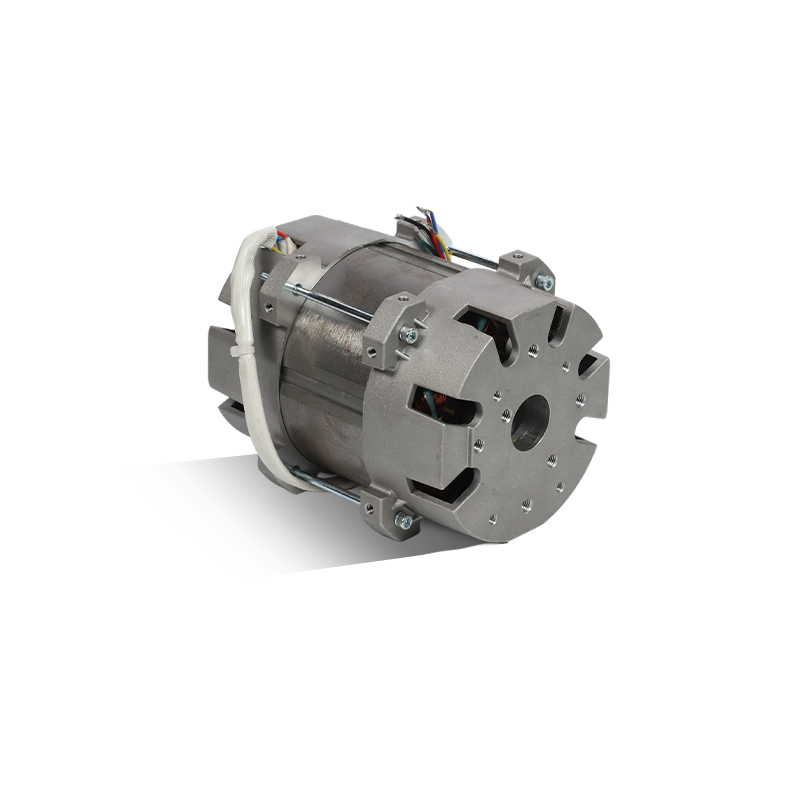
Even a well-designed motor can drift when incoming parts vary. Armatures, stators, rotors, commutators, magnets, bearings, and housings all carry tolerances that influence noise, efficiency, and service life. The practical response is to treat critical dimensions as process parameters, not just inspection points. For many of the starter and alternator programs we support, the armature is a good example. Winding tension, commutator concentricity, lamination stack length, and brazing quality can decide whether final assembly runs smoothly or spends its day chasing electrical variation. Keeping armature production close to assembly helps because feedback travels a short distance. When a winding issue appears, the people who build the armature and the people who test the motor can compare notes the same day.
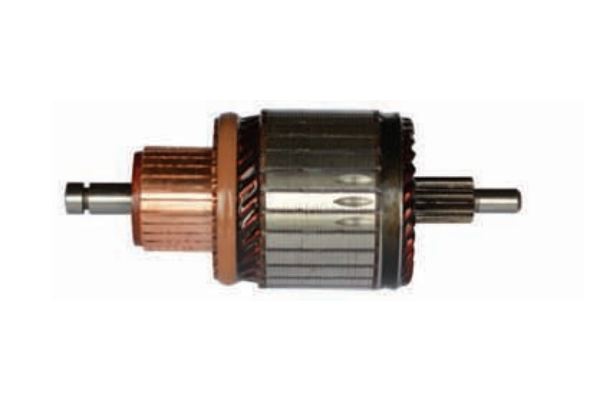 Starter Motor Armatures for OEM and ODM SourcingBrowse Bosch-type and Chrysler armature series with OEM replacement part numbers and listed dimensions for starter motor sourcing.View Product →
That same principle applies to purchased parts: a clear drawing, a stable supplier, and a realistic sampling plan are worth more than a last-minute sorting operation. It also helps to review component specifications with the process in mind. A tolerance that looks reasonable on a drawing may be difficult to hold repeatedly in high volume, or it may be tighter than the application really needs. When engineering and production review those details together, the result is usually a more buildable motor and a calmer line.
Control the process where the loss is created
Optimization becomes concrete when you walk the line and ask where a defect is born. Winding rework, lamination burrs, rotor imbalance, magnet variation, and assembly misalignment rarely appear for abstract reasons. They come from a specific tool, a specific setup, or a specific handoff. The table below is a simple way to frame the conversation. It is not exhaustive, but it helps teams move from "we have quality problems" to "this station needs a different control."
| Stage | Common loss | Practical countermeasure |
|---|---|---|
| Winding | Loose or uneven turns, insulation damage | Tension control, wire guide inspection, first-piece check |
| Lamination and machining | Burrs, dimensional drift | Tool wear tracking, deburring check, in-process gauging |
| Rotor balancing | Vibration and noise | Balance correction before assembly, fixture repeatability |
| Magnet and magnetization | Weak or uneven flux | Magnet incoming checks, fixture cleanliness, magnetization verification |
| Assembly | Misalignment, missing parts | Poka-yoke fixtures, torque traceability, station audit |
| End-of-line test | Repeated failures with unclear cause | Failure routing back to the responsible station |
The pattern is consistent: measure at the source, record the result, and give the operator a way to act on it. A torque trace on a critical fastener is more useful than a final inspection that only discovers a loose connection later. A daily winding first-piece check is more useful than a weekly rework report. These controls do not need to be complicated. They need to be close enough to the work that people can use them without leaving the station.
Use testing as a feedback loop
Testing should not be the place where problems are discovered for the first time. End-of-line checks are essential, but their greater value is as a feedback loop. Winding resistance, insulation resistance, high-potential testing, no-load current, speed, vibration, and temperature rise all tell a story about earlier stations. When a motor fails, the useful question is not only "what is wrong with this unit?" but "which station changed before this failure appeared?" A simple list can keep the loop practical:
- Route each failure code to the station that can correct it.
- Review the top three failure modes in a short daily meeting.
- Compare test data by shift, fixture, and operator without using it as a blame tool.
- Recheck the first piece after any setup change.
- Keep a small library of known-good and known-bad samples for training.
When test data is visible and discussed, operators begin to see the connection between a small adjustment at winding and a cleaner result at end-of-line. That is production optimization in its most useful form. It also makes improvement less mysterious. People stop waiting for a large capital project and start asking which small control would remove the next repeat failure.
Match the platform to the application
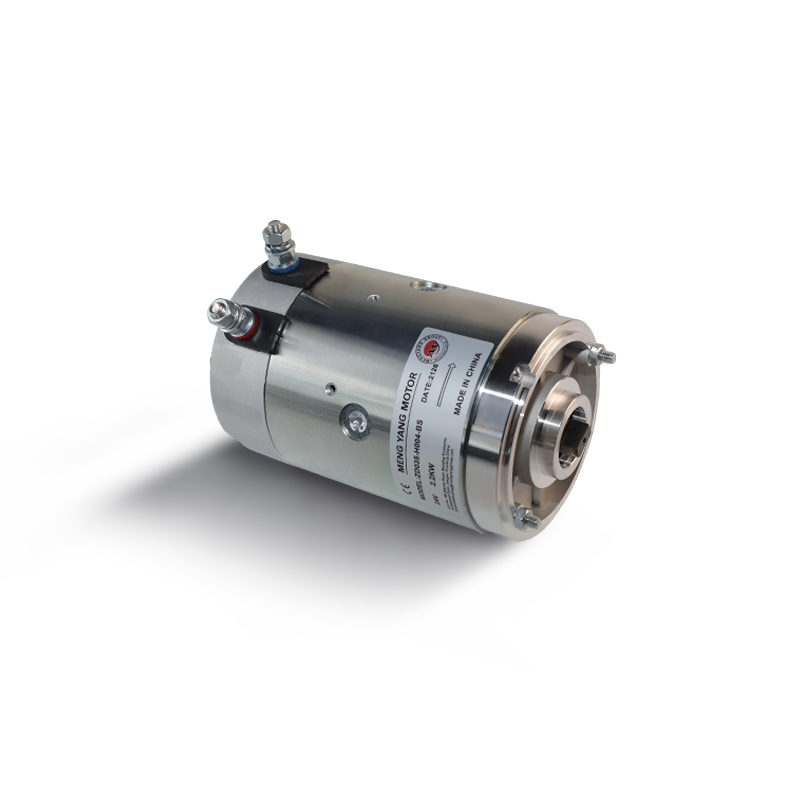
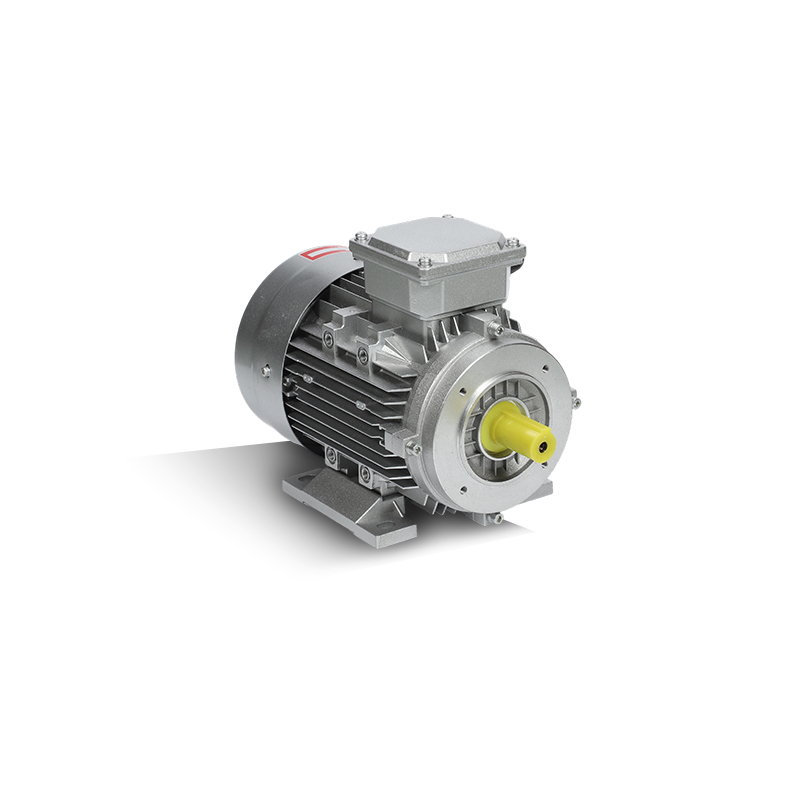
Not every motor should be optimized on the same line or by the same measures. A general industrial drive has different priorities from a starter motor, a sweeper brush motor, or a warehouse truck drive. Platform thinking helps here. If the application calls for a standard industrial asynchronous motor, an IEC or NEMA platform can reduce engineering effort and make spare parts and service more predictable. For equipment that needs compact power, electronic control, and lower maintenance, a brushless DC platform may be the better starting point. For gear-driven equipment, the gearbox and motor should be treated as one system rather than two separate purchases. The goal is not to force every product into one process; it is to give each product family a stable process that fits its volume, tolerances, and test requirements.
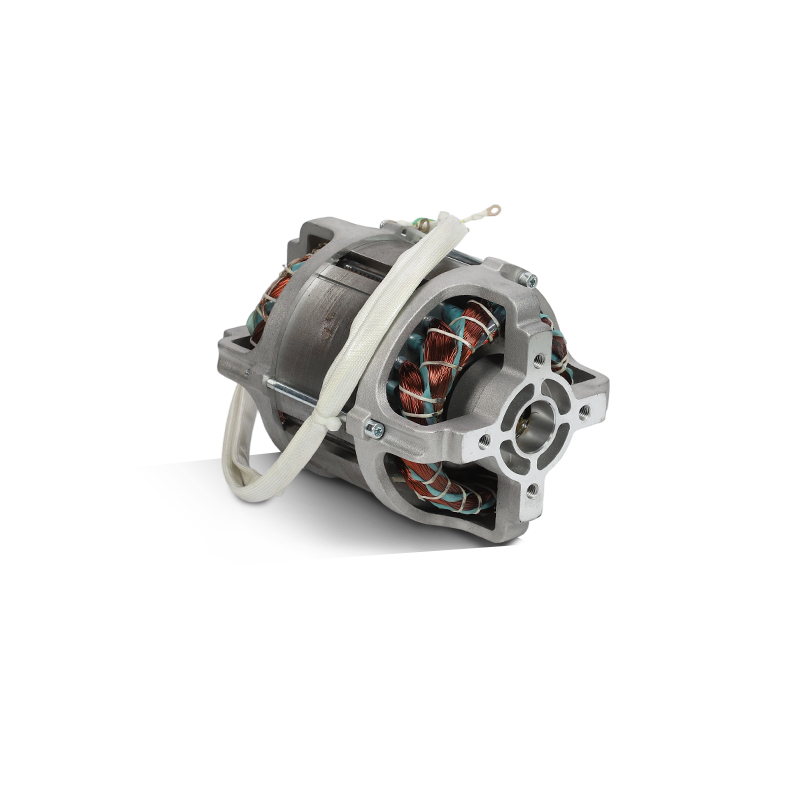 IEC AC Asynchronous Motors for Industrial Drive PlatformsReview IEC-standard asynchronous motor series for industrial machinery, pumps, fans, and conveyors, with frame, efficiency, and protection options.View Product →
In our own catalog, this platform approach is visible in the way we organize AC motors, DC motors, and application-specific units. It is also why we keep engineering, manufacturing, and delivery under one operating system through our subsidiary in Wuxi. When a customer's requirement changes, the conversation does not have to travel through several disconnected departments.
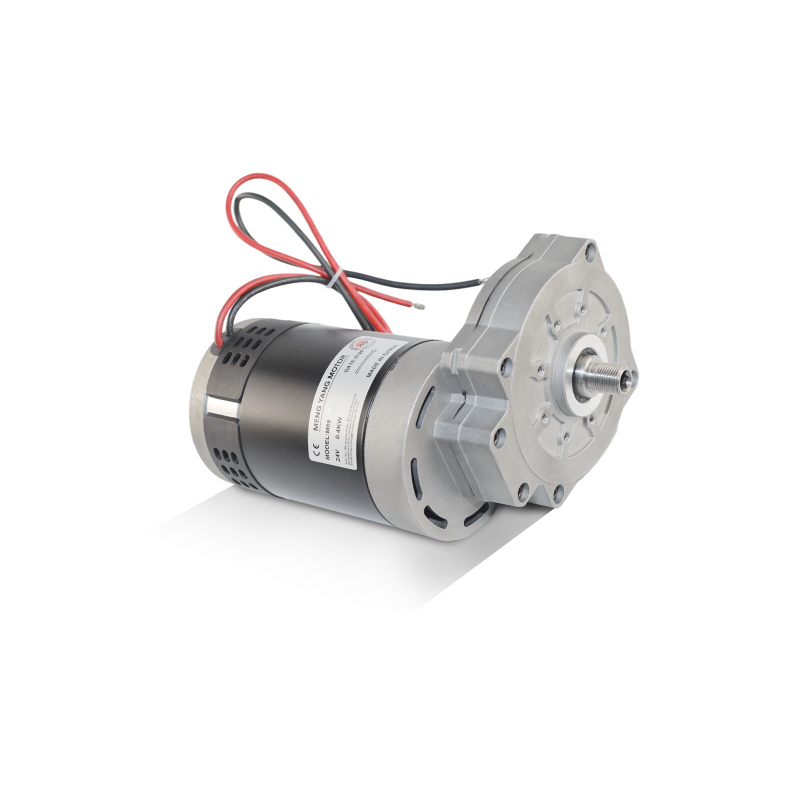 Brushless DC Motor Series for OEM and ODM ApplicationsCompare PM, wound-field, controller-integrated, and sweeper brush disc BLDC motor families for industrial, automotive, medical, and robotic equipment.View Product →
A practical example is the difference between a standard AC motor and a brushless motor for a cleaning machine. The AC unit may be optimized for robust continuous operation, while the BLDC unit may be optimized for controllability and compact packaging. Both can be efficient, but they need different fixtures, different test limits, and different operator knowledge. Treating them as the same product with a different label is where many optimization plans lose their way.
Scale with modular flow and trained people
Scaling a motor line magnifies whatever is already in the process. If changeovers are slow, higher volume makes them more painful. If a fixture is unreliable, more shifts mean more variation. Modular cells, visual work instructions, and quick-change tooling help, but they only work when people understand why they exist. With a 70,000-square-meter plant and a team of more than 300 people, we have learned that training is not a soft extra. It is part of the production system. Operators should know the difference between a good winding and a questionable one, and they should feel comfortable stopping the line when something looks wrong. Suppliers should know which dimensions matter and why. Engineers should spend time on the floor, not only in the office. When these habits are in place, automation becomes easier to justify because the process is already stable enough to automate.
Make optimization a habit
Electric motor production optimization is a habit, not a one-time project. It starts with a design that respects manufacturing, continues with stable components and controls at the source, and improves when test data is fed back to the people who can act on it. The most effective improvements are often quiet: a better fixture, a clearer drawing, a shorter feedback loop, a more thoughtful changeover. If you would like to see how we approach motor manufacturing, you can learn more about our company or contact our team to discuss your application.