 English
 中文简体
中文简体 русский
 Français
 Español
 عربى
عربىCarpenter 49 alloy is a name that tends to surface whenever a magnetic circuit has to be smaller, lighter, or hotter than ordinary electrical steel allows. It belongs to the Fe-49Co-2V family of soft magnetic alloys — roughly 49% cobalt and 2% vanadium, with iron making up the balance — and it gets specified for one reason above all: it carries more flux per unit of volume than nearly any other commercially available soft magnetic material.
For anyone building starter motors, alternators, or compact high-torque machines, that single property decides very practical things: how large the rotor has to be, how much copper goes into the windings, and how the assembly behaves in a hot engine bay. This guide covers what the alloy actually is, what its numbers mean on a drawing, how it compares with silicon iron, and what to consider when you buy finished parts made from it.
What Is Carpenter 49 Alloy?
Carpenter 49 alloy is a wrought iron-cobalt soft magnetic alloy. The nominal chemistry is about 49% cobalt, 1.5-2.1% vanadium, and the balance iron, held to tight limits on carbon, sulfur, nitrogen, and oxygen because trace residuals quietly damage permeability and raise hysteresis loss.
The vanadium is doing two jobs at once. It improves ductility so the alloy can be rolled into strip and drawn into bar, and it raises electrical resistivity slightly, which helps reduce eddy current losses when the material sees alternating flux. Without it, the iron-cobalt system is brittle enough that practical rolling becomes very difficult.
In technical literature the same material turns up under several labels — Fe-49Co-2V, 49Co-2V iron, 49% cobalt iron, and a handful of older trade names. Because chemistry limits and anneal specifications differ between producers, the useful comparison is always the certified analysis and magnetic test data, not the name on the box.
It is normally supplied in a few standard forms:
- Cold-rolled strip, usually in thin gauges, for laminated cores and punched parts.
- Hot-rolled bar or forged stock for solid pole pieces, shafts, and machined magnetic components.
- Wire and rod for specialised forming operations.
- Finished laminations, stacks, and wound cores from converters who cut, anneal, and coat the material for you.
Key Properties at a Glance
Most design decisions come down to a small set of numbers. The table below summarises the figures that come up most often in early-stage selection work.
| Property | Typical value | What it means in a design |
|---|---|---|
| Cobalt content | 48.5-49.5% | Sets the high saturation level and drives most of the raw material cost |
| Vanadium content | 1.5-2.1% | Improves workability and raises resistivity |
| Saturation flux density | ~2.4 T (24 kG) | Smaller magnetic cross-section for the same flux |
| Curie temperature | ~940 °C | Magnetic performance holds up at elevated operating temperatures |
| Electrical resistivity | ~40 µΩ·cm | Loss behaviour depends heavily on lamination gauge |
| Coercivity (annealed) | Low, typically under 1 Oe | Low hysteresis loss and efficient magnetisation |
| Maximum permeability | High after an optimised anneal | Suits sensitive relays, actuators, and instrument-grade circuits |
| Relative material cost | High | Justified mainly when weight, volume, or temperature is the constraint |
Two caveats are worth stating plainly. First, the magnetic behaviour of this alloy is the product of heat treatment as much as chemistry — a poorly annealed lot can underperform a well-processed one by a wide margin. Second, published values are typical rather than guaranteed, so your design should be validated against the certified test data that ships with the material.
Why Engineers Specify It — and What It Costs
There is a simple trade at the heart of the decision: you pay a premium in material and processing to buy space, weight, and thermal margin.
What you gain
- Higher flux density, so the same torque or output comes from a smaller, lighter magnetic circuit.
- Better high-temperature behaviour, with less derating in hot engine compartments and aerospace bays.
- Design headroom, because the magnetic path stops being the limiting factor.
- Efficiency gains in certain duty cycles, often with fewer turns and less copper when the anneal is right.
What it costs you
- Raw material price: the cobalt content makes it dramatically more expensive than standard electrical steel.
- Fabrication: it is harder and less forgiving, with more tooling wear and stricter handling.
- Annealing: magnetic properties must be restored after cutting or forming, adding a process step and a quality risk.
- Availability: thickness, width, and stock form options are narrower than for commodity steels.
For a mainstream industrial motor, the maths rarely works. For a weight-critical starter, a high-output alternator, or a compact high-torque machine, it often does.
Starter Motors and Armatures: The Classic Application
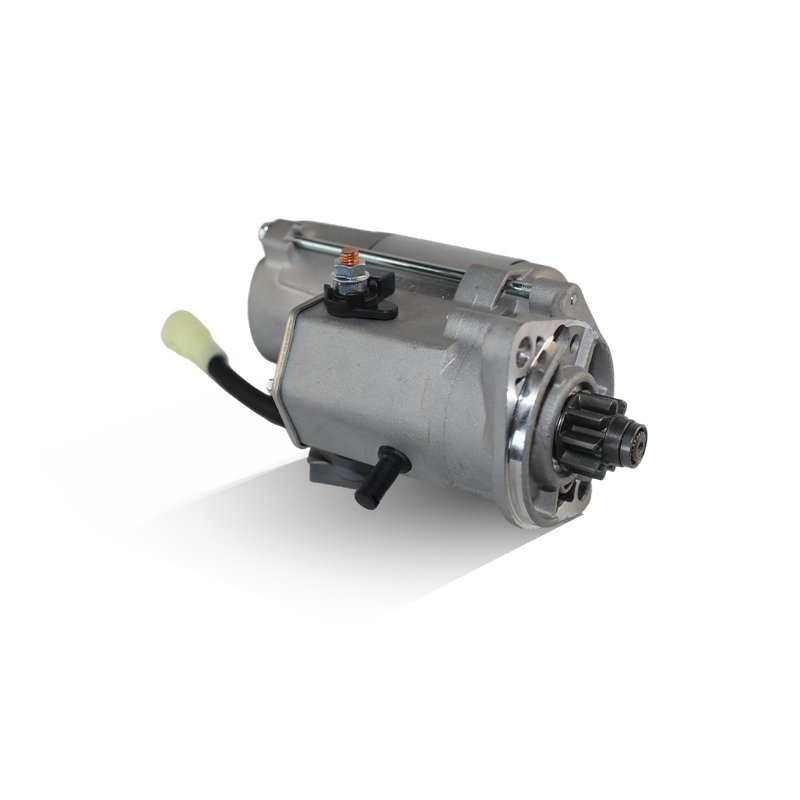
Heavy-duty starting is one of the clearest cases for Fe-49Co-2V. A starter must deliver a large torque pulse from a small envelope, frequently at low temperature when battery voltage sags. Because the alloy saturates at roughly 2.4 T against about 2.0 T for the best silicon irons, the pole pieces and armature core can be made smaller and lighter without losing cranking torque, and the machine keeps more of its output when it is hot.
In practice that means armature cores and pole assemblies built to tight tolerances, where insulation quality and stacking discipline matter as much as the alloy itself.
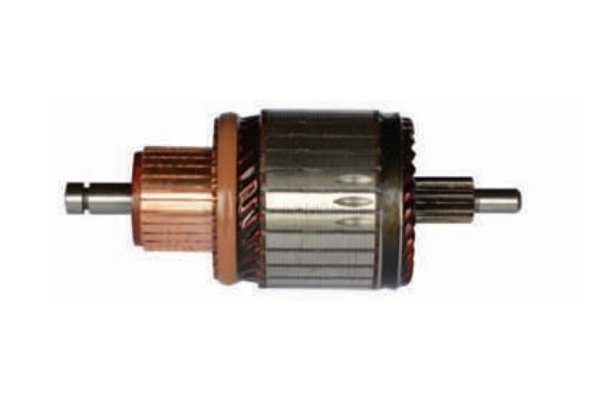 OEM/ODM Starter Motor Armature Series for Bosch and ChryslerExplore 12V armatures across MYB100-MYB119, with Bosch and Chrysler series, replacement part numbers, dimensions, and design guidance.View Product →
Armature production at this level is routine work for us, including brazed constructions where commutator riser joints have to survive high current and continuous vibration without cracking.
Alternators, Generators, and Other High-Flux Devices
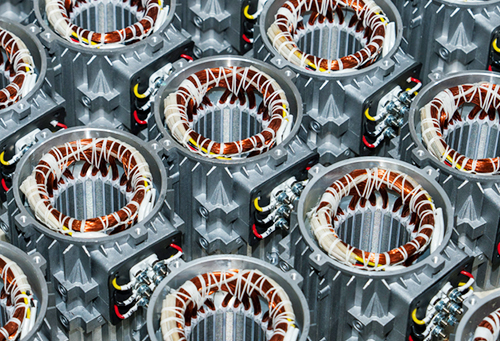
Alternators and generators benefit for the same reason. When output is raised without enlarging the frame, the rotor and stator magnetic path becomes the bottleneck, and higher saturation density buys back margin. In high-output or high-temperature alternator designs, cobalt-iron rotors and stator cores appear where a conventional stacked core would simply run too hot or grow too large.
Beyond vehicle electrics, the alloy shows up in aircraft generators, high-performance servo motors, magnetic bearings, pole pieces for electromagnets and relays, and compact transformers where mass is at a premium. It is a specialist material, and that is precisely the point.
How It Compares With Silicon Iron and Nickel-Iron
It helps to place Carpenter 49 alloy against the two families it is most often weighed against: silicon iron, which does the bulk of the world's motor work, and nickel-iron, which trades saturation for permeability.
| Material family | Saturation flux density | Relative cost | Typical fit |
|---|---|---|---|
| Fe-49Co-2V | ~2.4 T | Highest | Weight-critical starters, generators, aerospace and high-temperature circuits |
| Silicon iron | ~2.0 T | Low | Industrial motors, transformers, volume automotive alternators |
| 50% nickel-iron | ~1.5-1.6 T | Medium to high | High-permeability relays, sensitive circuits, shielding |
| 80% nickel-iron | ~0.75-0.8 T | High | Signal-level transformers, low-level magnetic amplifiers, shielding |
The pattern is straightforward: saturation falls as you move from cobalt-iron to silicon iron to nickel-iron, while permeability and price behave quite differently. If size and weight are not binding constraints, silicon iron is almost always the economical answer.
Machining, Annealing, and Sourcing Notes
If you are evaluating the alloy for a new design, the processing sequence usually looks like this.
- Choose the form: strip for laminated cores, bar or forging for solid pole pieces and machined parts.
- Plan the cutting method: stamping is fast but stresses the material and wears tooling, while laser and wire EDM cut cleanly but leave a heat-affected edge.
- Specify the anneal: temperature, atmosphere, and cooling rate determine final permeability and coercivity, and this is where most performance variation originates.
- Handle the surface: insulation coating, plating, or varnish may be needed depending on whether the part sees alternating flux.
- Validate against certificates: chemistry, magnetic test data, and mechanical condition, lot by lot.
Commercially, availability is the practical constraint. Fewer mills and converters handle cobalt-iron than electrical steel, so lead times and minimum quantities are longer. Buying finished laminations or complete sub-assemblies is often simpler than buying strip and building the process yourself.
Sourcing Parts Built Around High-Flux Alloys
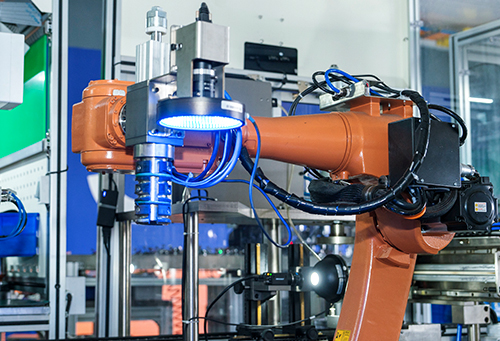
Jiangsu Mengyang Motor Manufacture has been making motors and vehicle electrical components since 1997, and magnetic materials sit at the centre of what we do. Our plant covers roughly 70,000 square metres, we work with more than 300 people, and our subsidiary Wuxi Mengyuan Motor Manufacture handles engineering, manufacturing, and delivery as one integrated system.
Most of our output goes into commercial vehicle applications — starter motors, alternators, armatures, solenoids, overrunning clutches, rotors, stators, rectifiers, and regulators — alongside IEC and NEMA motors for industrial equipment.
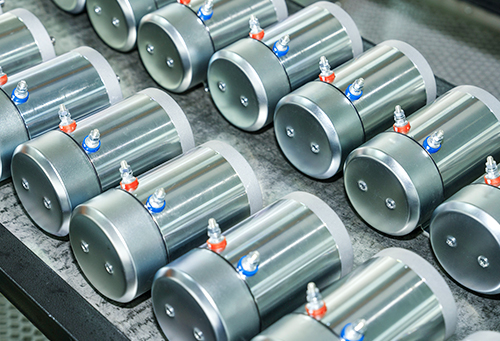
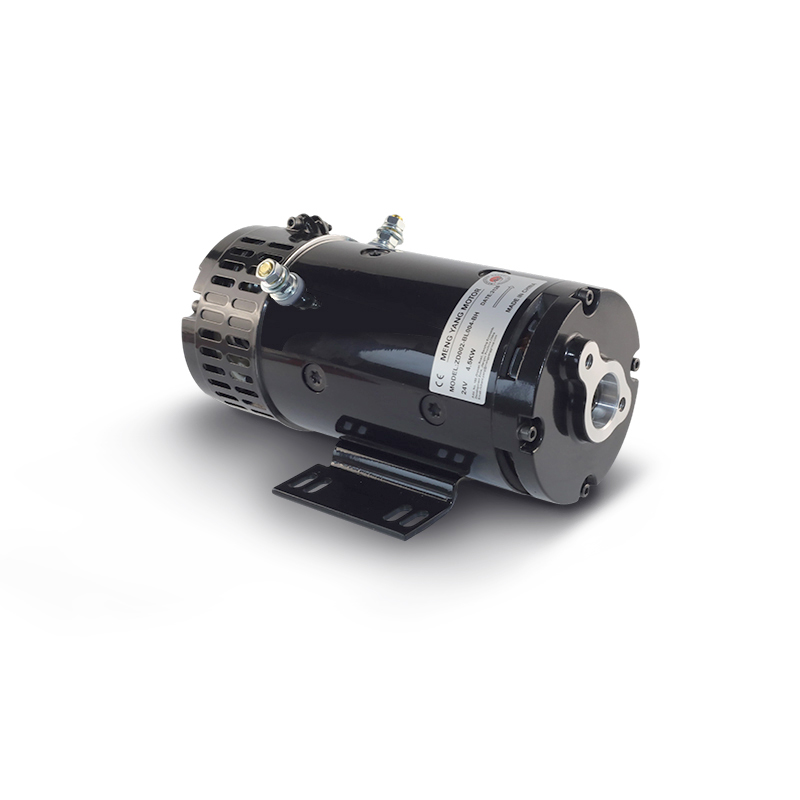 Brushed DC Motors in PM and Wound Field DesignsExplore brushed DC motor series in PM and wound field designs across frame sizes for compact, high-torque automotive and industrial applications.View Product →
When a design brief calls for compact, high-torque DC power, that is a conversation we have almost every week; our brushed DC lines run across several frame sizes and excitation types, and we can talk through armature design, lamination choices, and the trade-offs for your duty cycle. You can read more about how we build and deliver before you send a specification.
Common Questions About Carpenter 49 Alloy
Is it the same as other 49Co-2V grades?
Broadly yes — they share the iron-cobalt-vanadium chemistry and the same high saturation behaviour. But producers differ in residual limits, thickness range, and anneal specification, so two materials carrying the same generic designation can perform differently. Compare certified magnetic data before substituting one for another.
Can it be machined and formed like electrical steel?
Not quite. It is harder, less ductile, and more sensitive to the heat and stress introduced by cutting. Stamping, laser cutting, and EDM all work, but tooling, edge quality, and post-process annealing need more attention than with silicon iron.
When is it not worth the cost?
Whenever volume and weight are not tightly constrained. A standard industrial motor, a volume alternator, or a general-purpose transformer will nearly always be better served by conventional silicon steel.
Carpenter 49 alloy earns its place in a small number of demanding designs, and in those designs nothing else does the job quite so compactly. If your magnetic circuit is fighting for space, weight, or temperature margin, it deserves a serious look — and it deserves to be sourced from someone who understands what the material demands on the shop floor.